Guides · Split
12 Top Things to Do in Split

CEO and co-founder
This guide lists the 12 top things to do in Split, Croatia, the sights that genuinely earn a place on your Dalmatian itinerary whether you have a single weekend or a full week. Each entry includes the exact address, the nearest Promet Split bus line or ferry connection, and a Pro Tip drawn from how locals and repeat visitors actually use the city. We have ordered the list so you can plan efficient sightseeing routes: the old-town entries cluster around Diocletian's Palace and the Riva, the Marjan and beach stops sit just west and east of the centre, and the final four are day trips you can pair with a rental car or scheduled bus.
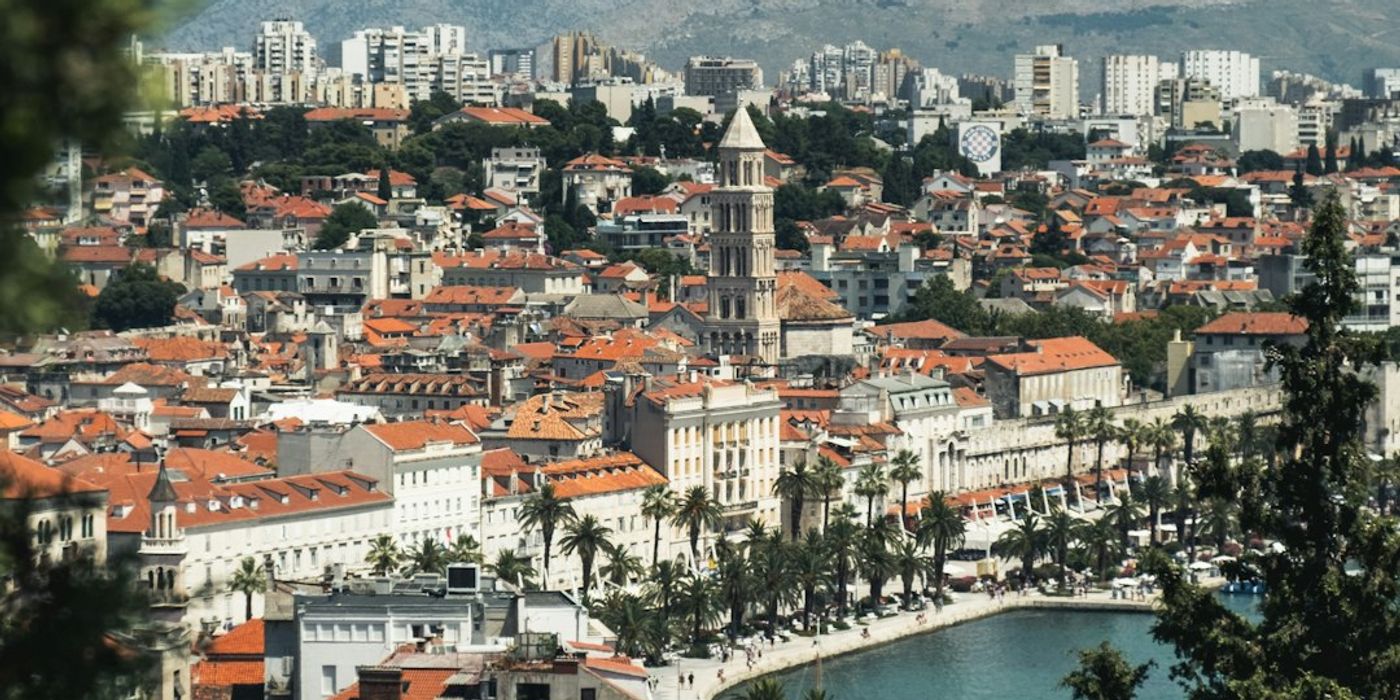
Split rewards travellers who treat its monuments as part of a working city rather than a static museum. The 4th-century walls of Diocletian's Palace still house cafes, apartments, and the cathedral; People's Square is where locals run errands at lunchtime; and the Riva fills every evening with strollers heading for the islands. The places below mix landmark Roman history (Diocletian's Palace, the Cathedral of Saint Domnius, Salona) with the green Marjan peninsula, the sandy Bačvice Beach, and short trips to Trogir, Klis Fortress, and Krka National Park.
Practical orientation: most central sights are walkable within 15 minutes of the main ferry port, public buses run by Promet Split connect outlying attractions, and Croatia adopted the Euro (EUR) in 2023. Expect crowds and high prices from late June through August, milder weather and fewer cruise stops in May, June, and September, and quieter shoulder months in April and October. The full circuit below sketches roughly five days at a comfortable pace, but a focused weekend can still cover the old-town highlights.
1Diocletian's Palace - The Living Heart of the Old Town
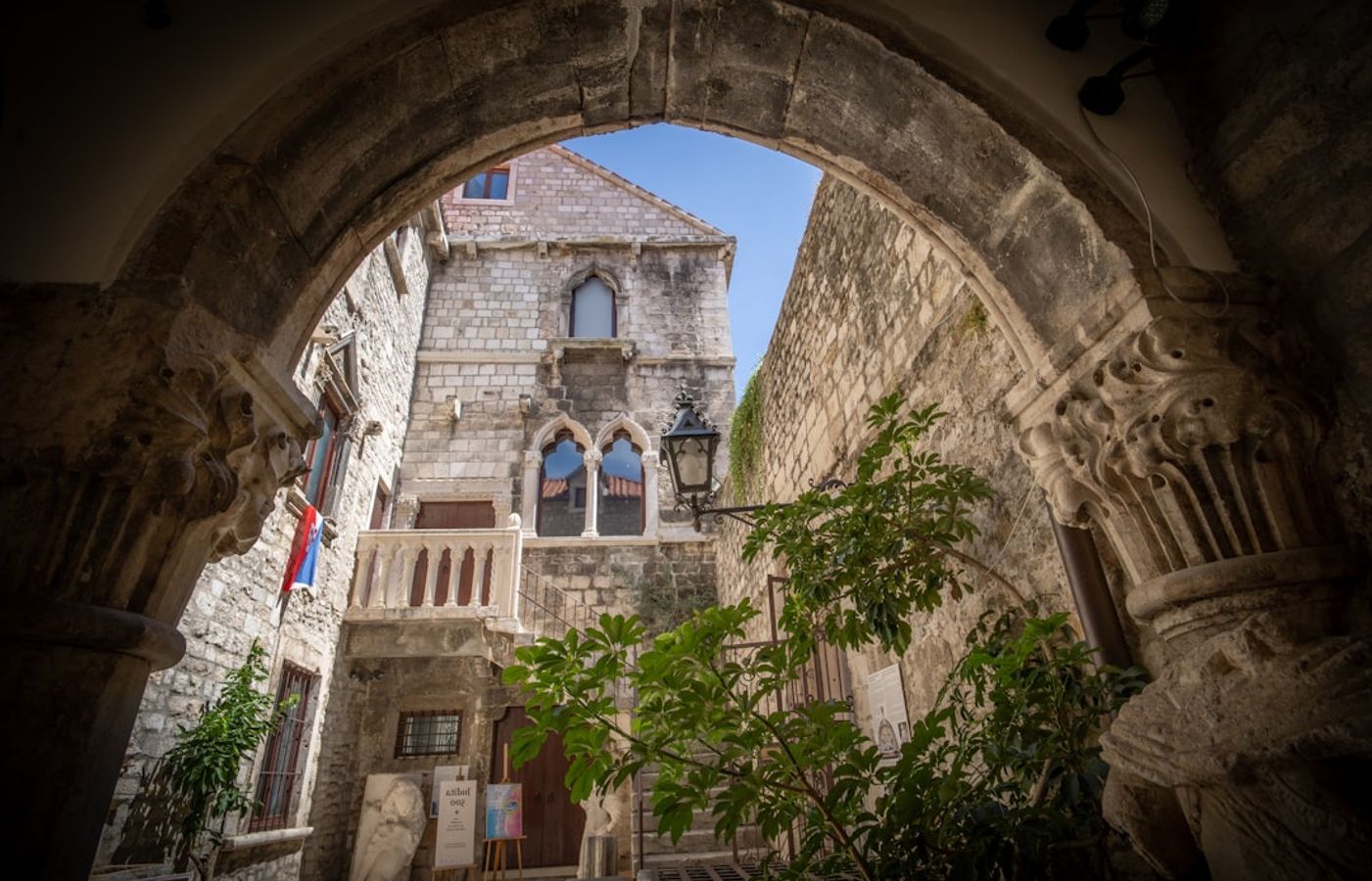
Topping every list of things to do in Split, Diocletian's Palace is a UNESCO World Heritage Site and one of the most complete surviving Roman imperial complexes in the world. Built between AD 295 and 305 as the retirement residence of Emperor Diocletian, the rectangular compound stretches roughly 215 by 180 metres and covers about 38,700 square metres - half fortified palace, half garrison town. Unlike most Roman ruins, the palace was never abandoned: locals moved inside its walls after the fall of nearby Salona in the 7th century, and around 3,000 people still live and work within the same limestone walls today.
Walk in through the imposing Golden Gate on the north side or the smaller Iron and Silver Gates, and the layout still follows the original Roman cardo and decumanus. The underground Substructures, a vast network of vaulted halls famous as the Game of Thrones throne room for Daenerys's dragons, run beneath the entire southern half and now host souvenir stalls and seasonal exhibitions. Above ground you'll pass Romanesque belfries, Renaissance loggias, and ground-floor cafes that share their masonry with 1,700-year-old imperial chambers.
Pro Tip: Start a palace visit at the Bronze Gate (sea-facing entrance from the Riva) just after 8:00, then walk uphill through the Substructures and pop out onto the Peristyle before the cruise tours arrive at 10:00. The acoustics in the empty Vestibule rotunda are extraordinary - listen for a-cappella klapa singers performing under the open oculus.
2Cathedral of Saint Domnius - Roman Mausoleum Turned Cathedral
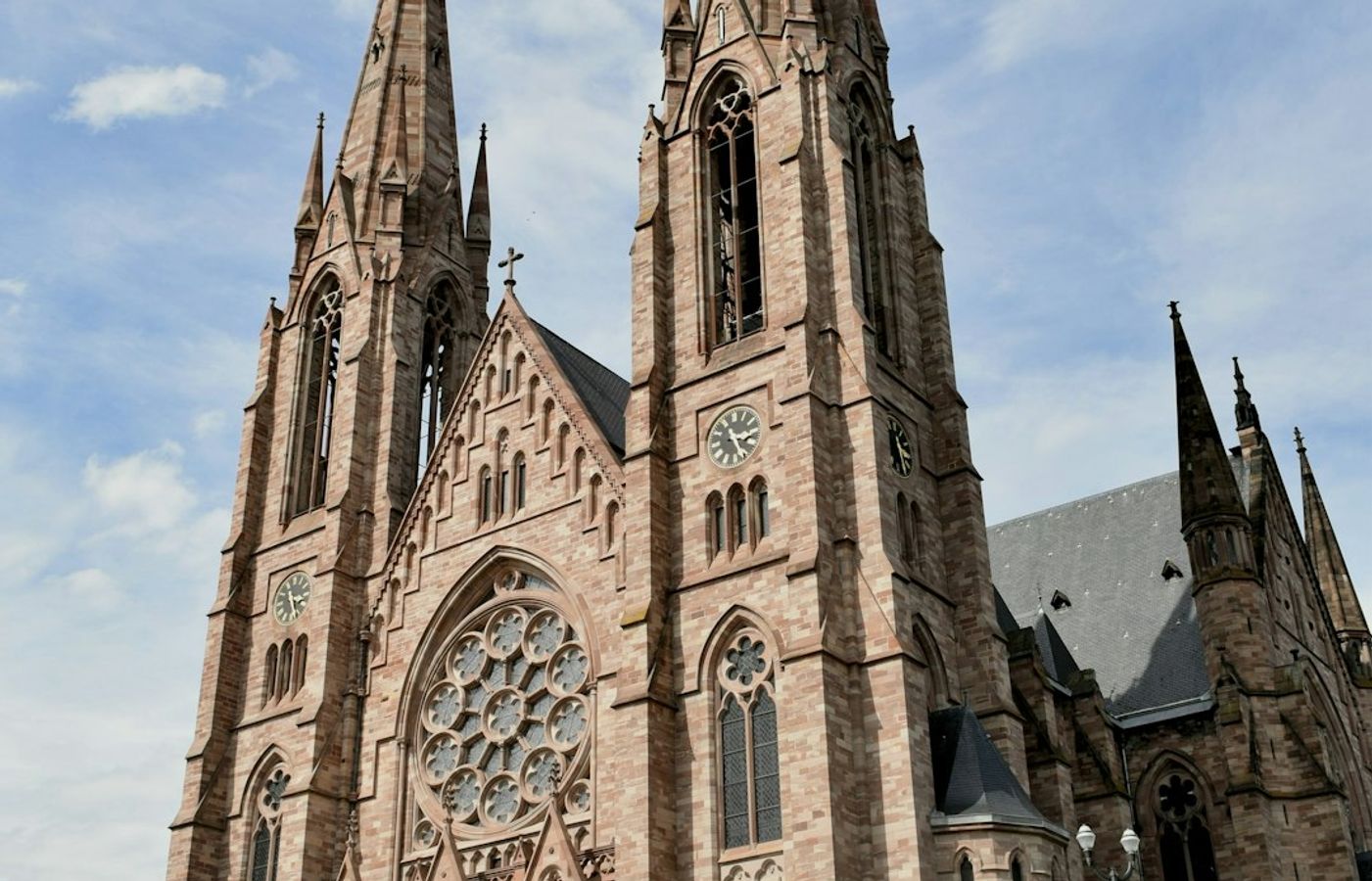
The Cathedral of Saint Domnius (Katedrala svetog Duje) sits at the eastern side of the Peristyle and is among the most extraordinary things to do in Split for anyone interested in Roman or Christian architecture. Built originally around AD 305 as the octagonal mausoleum of Emperor Diocletian - the very emperor who ordered the last great Roman persecution of Christians - the building was converted into a cathedral in the 7th century and dedicated to Saint Domnius (Sveti Duje), a Christian bishop Diocletian had executed at Salona in 304. The result is the oldest Catholic cathedral in the world still in use in its original structure.
A combined cathedral ticket (around 7 to 10 EUR in 2026) gives access to the cathedral interior, the crypt of Saint Lucy beneath, the Romanesque bell tower (60 metres tall, climbed via 183 steps), and the treasury. The wooden Buvina doors of 1214 depict 28 scenes from the life of Christ, and the high altar's Romanesque hexagonal pulpit and 13th-century choir stalls are some of the finest medieval carvings on the Adriatic coast.
Pro Tip: Climb the bell tower first, before the cathedral floor fills with tour groups. From the top platform you'll see the entire palace plan laid out below - the cleanest way to grasp how a Roman fort became a living medieval town - and the climb costs only a few extra euros on top of the combined ticket.

3Peristyle Square (Peristil) - The Ceremonial Centre of the Palace
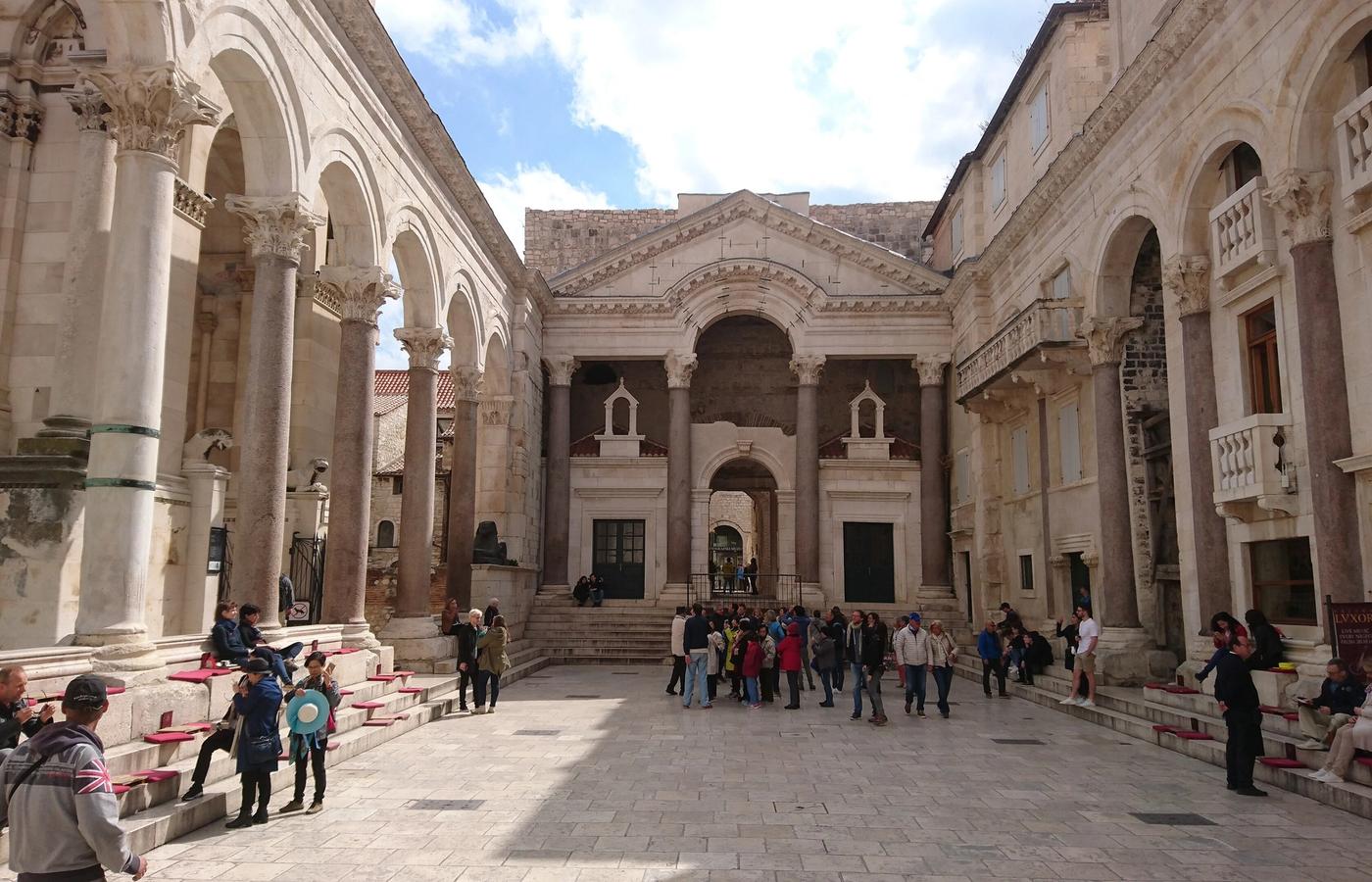
The Peristyle (Peristil) is the architectural and emotional centre of Diocletian's Palace and the most-photographed of all things to do in Split. The colonnaded courtyard measures about 35 by 13 metres and was the ceremonial space where Diocletian appeared before his subjects, framed by six tall Egyptian granite columns brought from Aswan. The columns themselves are roughly 1,800 years old and still carry the original Roman entablature.
Anchoring the south side is the Protiron, a triangular gable that once led into the emperor's private apartments and now opens onto the Vestibule rotunda. To the east stands the bell tower of the Cathedral of Saint Domnius; on the west are 15th-century Venetian-built houses that replaced the original palace temples. At the south-east corner stands a black-granite Egyptian sphinx over 3,500 years old, one of 12 that Diocletian originally imported. The square also doubles as a free open-air stage for the Split Summer Festival every July and August.
Pro Tip: The red-cushioned cafe (Luxor) that spills onto the Peristyle steps is overpriced - sit on the stone steps themselves with a takeaway coffee from a side alley like Dosud. The view is identical and you'll watch the city wake up in the same light Diocletian saw.
4The Riva - Split's Palm-Lined Waterfront Promenade
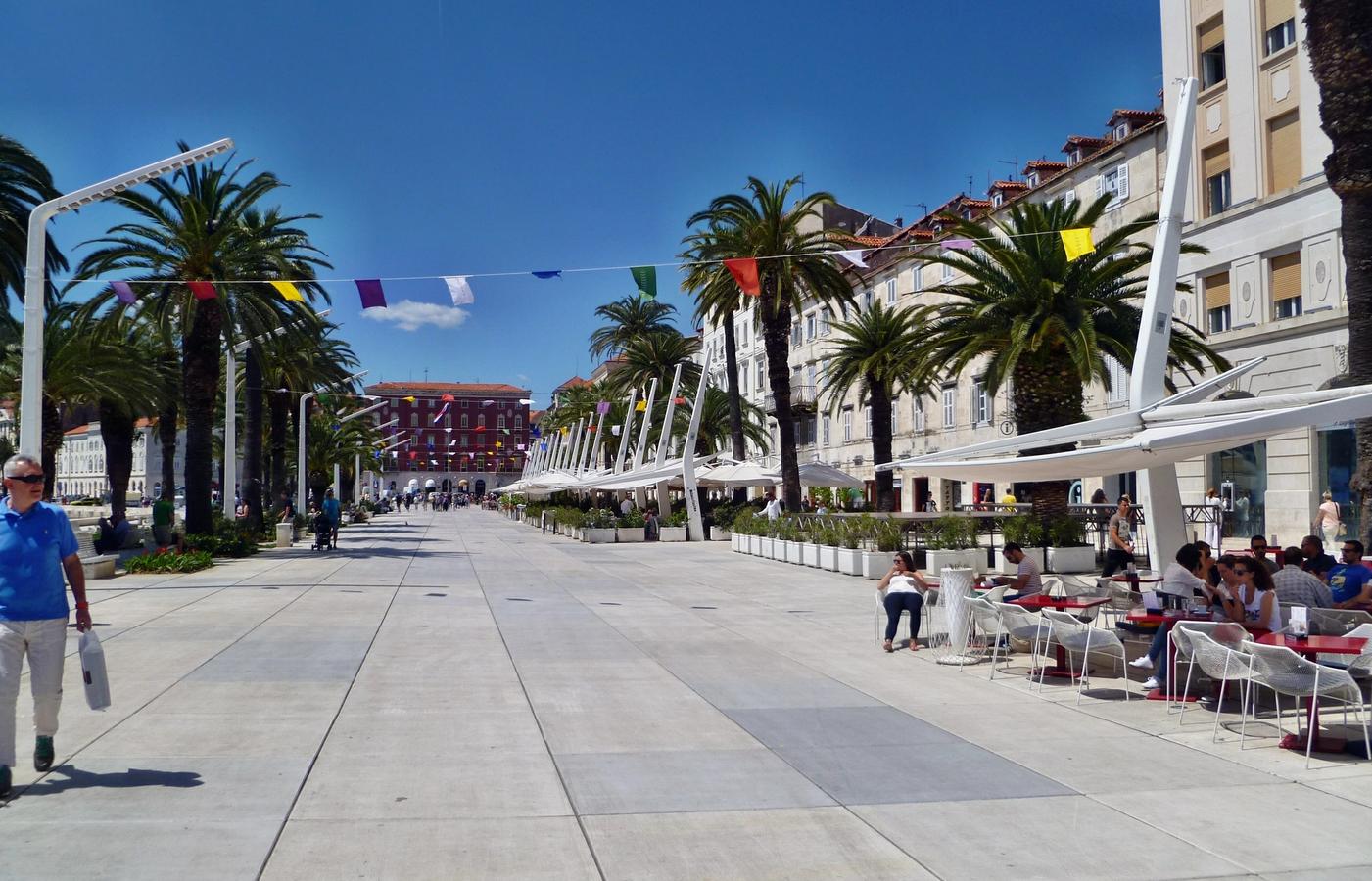
The Riva (officially Obala Hrvatskog narodnog preporoda, "Quay of the Croatian National Revival") is the 250-metre marble-paved promenade that fronts the harbour along the southern wall of Diocletian's Palace. It is the most reliable of things to do in Split when you have an evening to fill: pedestrian-only, lined with palm trees, set with white cafe tables, and pointed at a wall of Adriatic ferries waiting to leave for Hvar, Brac, Vis, and beyond.
The current pavement dates from a 2007 redesign by architects 3LHD, who replaced the old asphalt with creamy stone slabs and pure white sun-shade canopies. By day it is the city's open-air living room; by sunset it fills with locals doing the slow evening walk (the spanja), and by night it lines up with bars and ice-cream stalls. The Bronze Gate of Diocletian's Palace is set directly into the back wall, so you can step off the Riva and straight into the Roman Substructures.
Pro Tip: Skip the front-row Riva cafes where a coffee costs 4 to 5 EUR and head one block back to Bajamontijeva or Dosud streets. The coffee is half the price, the locals outnumber the tourists, and you can still see the masts of the ferries between the buildings.
5People's Square (Pjaca / Narodni trg) - The Medieval Civic Heart
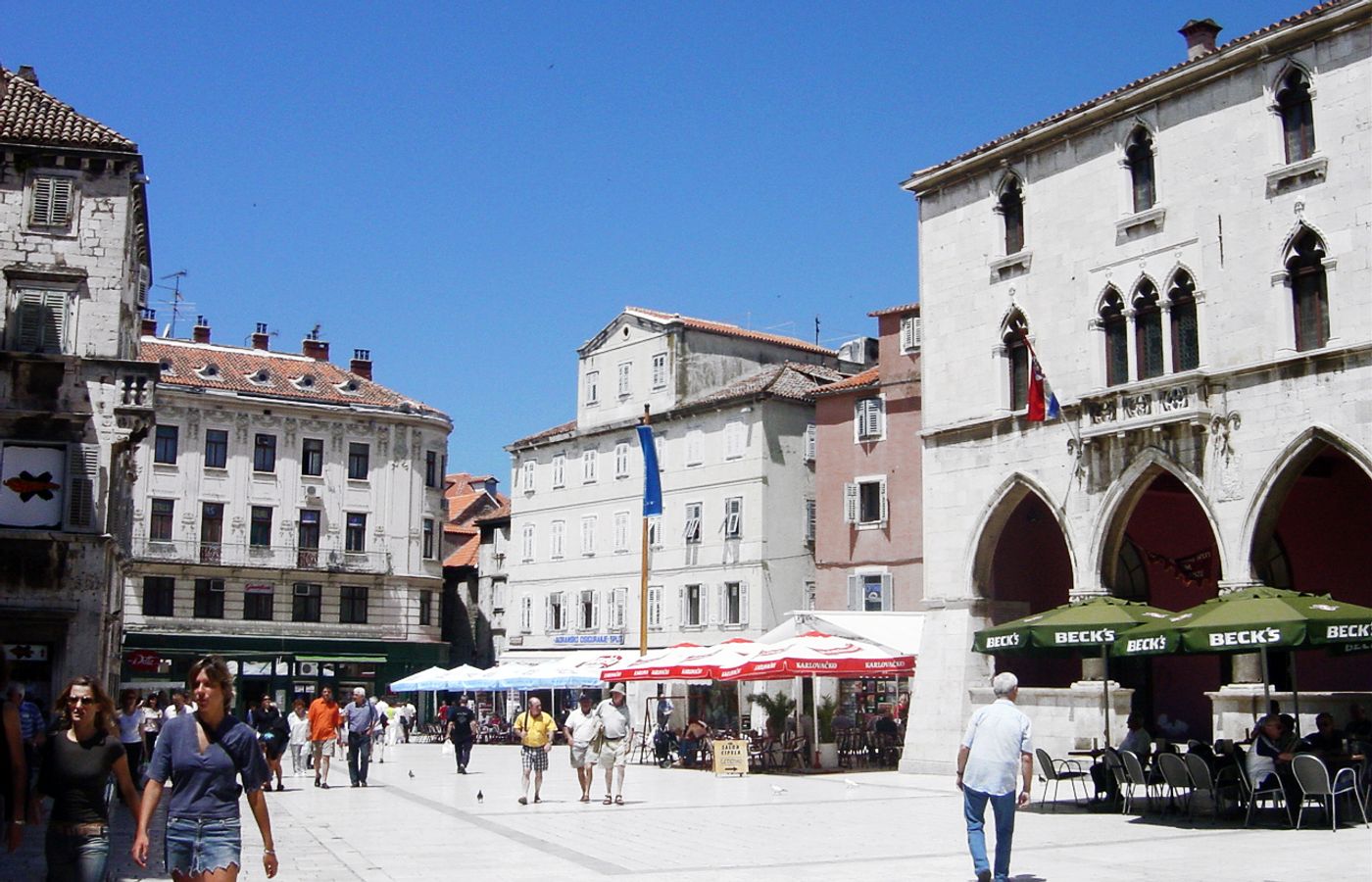
Locally known simply as Pjaca, People's Square (Narodni trg) became the civic heart of Split in the 13th century when the old town outgrew the Roman walls and spilled west. Today it is one of the busiest things to do in Split for anyone who likes watching a city work: the square is paved in white limestone, ringed by Romanesque and Renaissance palaces, and used daily as a marketplace, meeting point, and political stage.
The standouts are the 15th-century Town Hall (Vijecnica) with its Venetian Gothic loggia, the Karepic palace, and the Cipiko Palace on the corner - the home of one of Split's most prominent Renaissance families. The square's clock on the old Town Hall tower famously shows 24 hours instead of 12 and is one of the few surviving examples in Europe. Pjaca's cafes open from breakfast through to midnight, and locals still set up small fruit, flower, and souvenir stalls in the middle of the square.
Pro Tip: Use the square as a navigation anchor: from the Iron Gate (with the old Romanesque belfry) the entire old town fans out in narrow alleys. Visit late in the afternoon when the limestone glows gold under the western sun, and stop for an espresso at a cafe along the north side where you can still see Cipiko's 15th-century Gothic windows.
6Marjan Hill - The Pine-Forest Peninsula Above Split
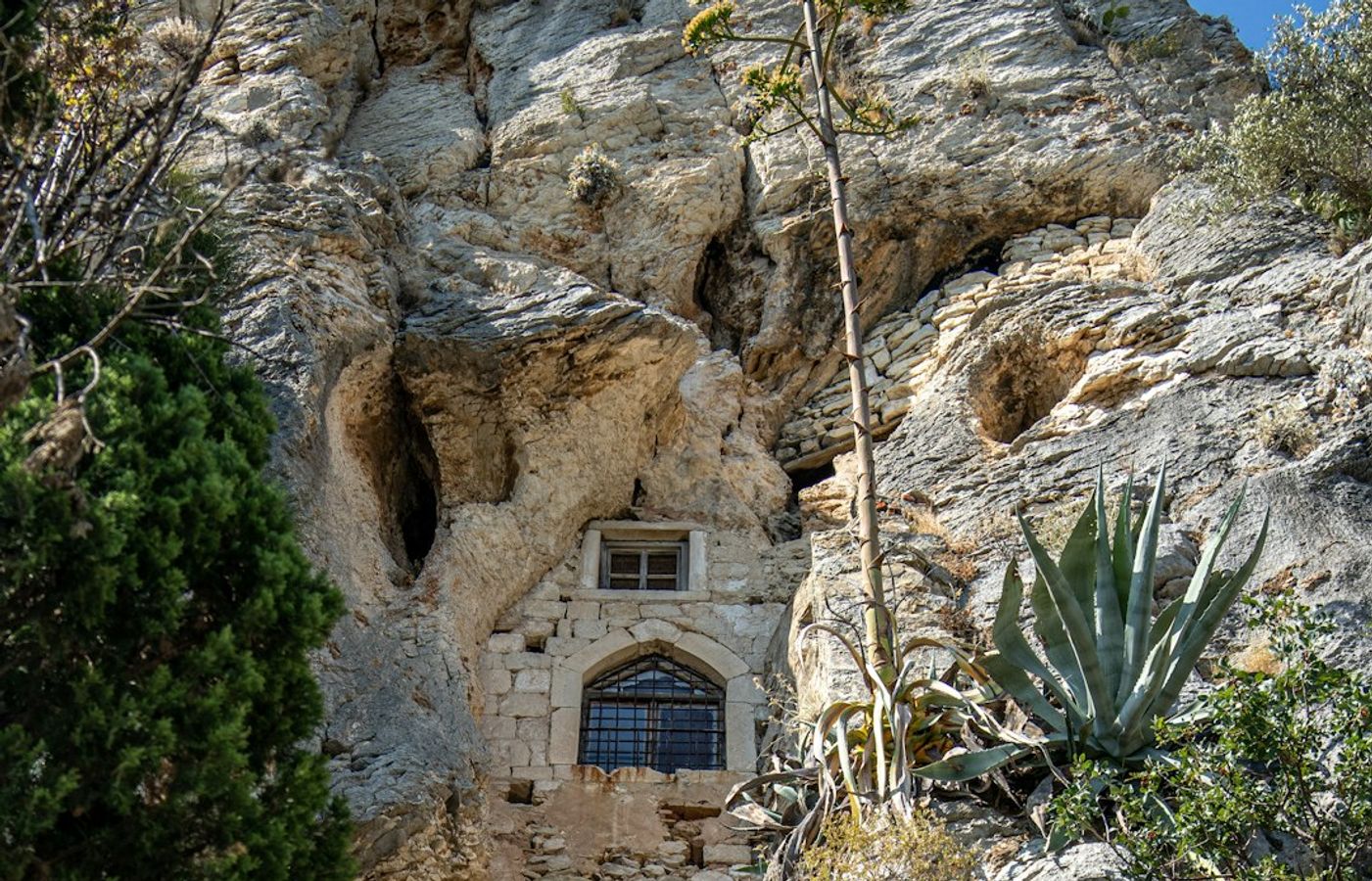
Marjan Hill is the green peninsula that rises directly behind Split and is one of the most rewarding free things to do in Split. The forest park covers about 340 hectares and tops out at 178 metres (the Telegrin peak), with pine groves, medieval hermits' chapels, and panoramic viewpoints over the old town, the harbour, and the Brac and Solta channels.
The classic route starts at the Sperun stairs at the western end of the Riva, climbs past the Vidilica viewpoint (about 15 minutes from the centre), and follows the ridge road through the pines to Telegrin, the Jewish cemetery (one of Europe's oldest, dating from the 16th century), the chapel of Sveti Jere, and down to the Kasjuni and Bene swimming coves on the southern shore. The peninsula also shelters the Mestrovic Gallery and the Natural History Museum's biological annex. Mountain bike, jogging, and rock-climbing routes are well marked.
Pro Tip: Set out at sunrise in summer (06:30 to 07:30) when the temperature is still under 25 degrees Celsius and you'll have the views to yourself. Bring water - there are very few fountains - and combine the walk with a swim at Kasjuni Beach on the way back rather than fighting for towel space at Bacvice.
7Bačvice Beach - Sandy Cove and Home of Picigin
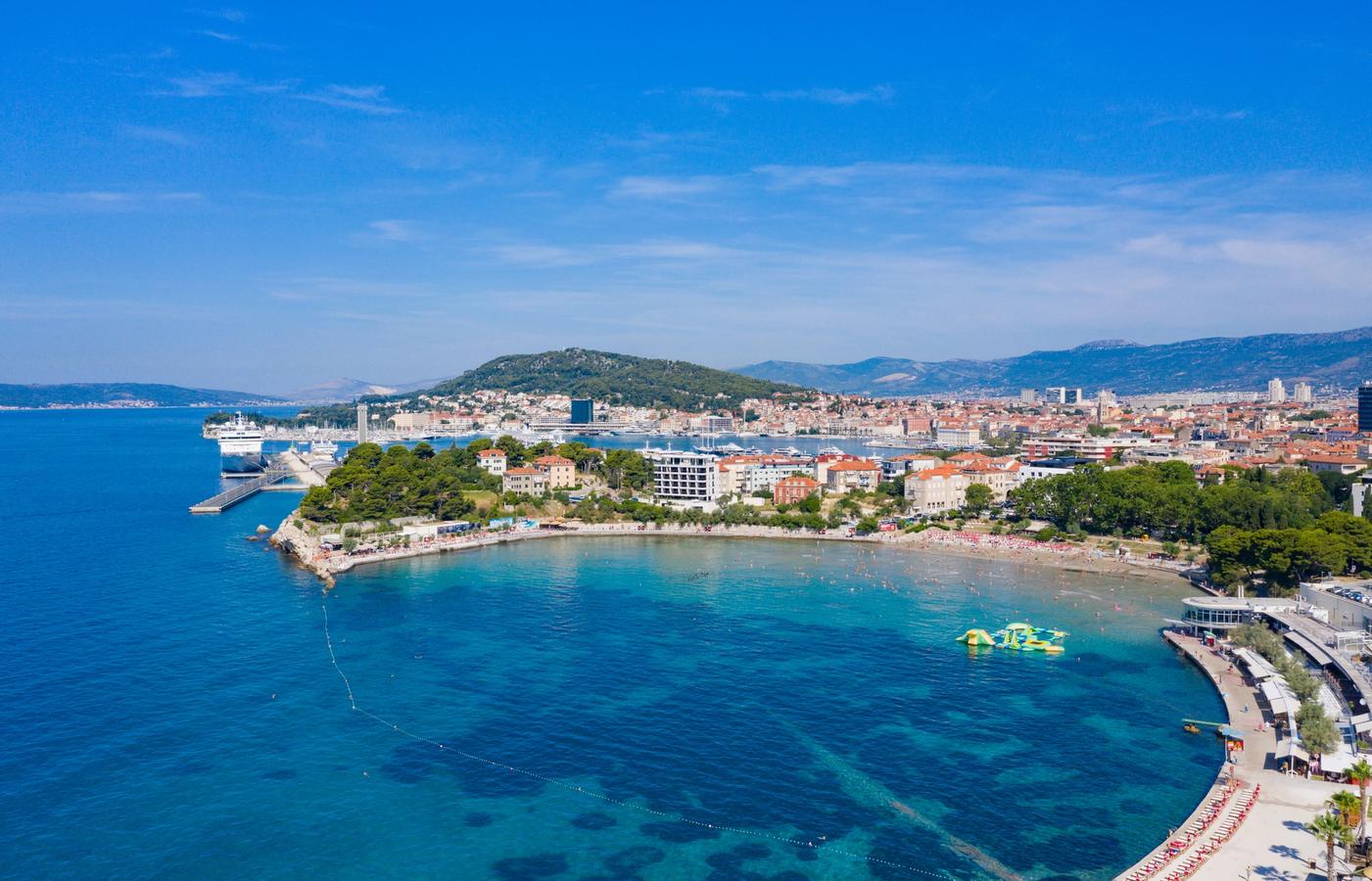
Bačvice is Split's main city beach and the only genuinely sandy beach in the immediate old-town area, which is why it tops most local rankings of things to do in Split with kids or after a hot day of sightseeing. The shallow cove fills slowly to chest-deep water about 50 metres from the shore, making it ideal for the home-grown game of picigin - a non-stop ball-keeping ritual played barefoot in the shallows that has been part of Split's identity since the late 19th century.
Behind the beach a multi-level complex of cafes, ice-cream parlours, and dance bars stays open until 03:00 in summer, so Bačvice doubles as a nightlife district when the sand empties at sunset. Lockers, showers, paddleboard rental, and a small water-polo pool are all on site. The neighbouring Firule and Trstenik coves are quieter and a 10-minute walk further east along the seafront.
Pro Tip: Forget the lounger and umbrella rental on the central strip - the price doubles in July and August. Walk five extra minutes to the eastern half of the bay (below Hotel Park) where the same sand is free, the water is calmer, and you can watch real picigin players competing at sunset.
8Ivan Meštrović Gallery - Croatia's Greatest 20th-Century Sculptor
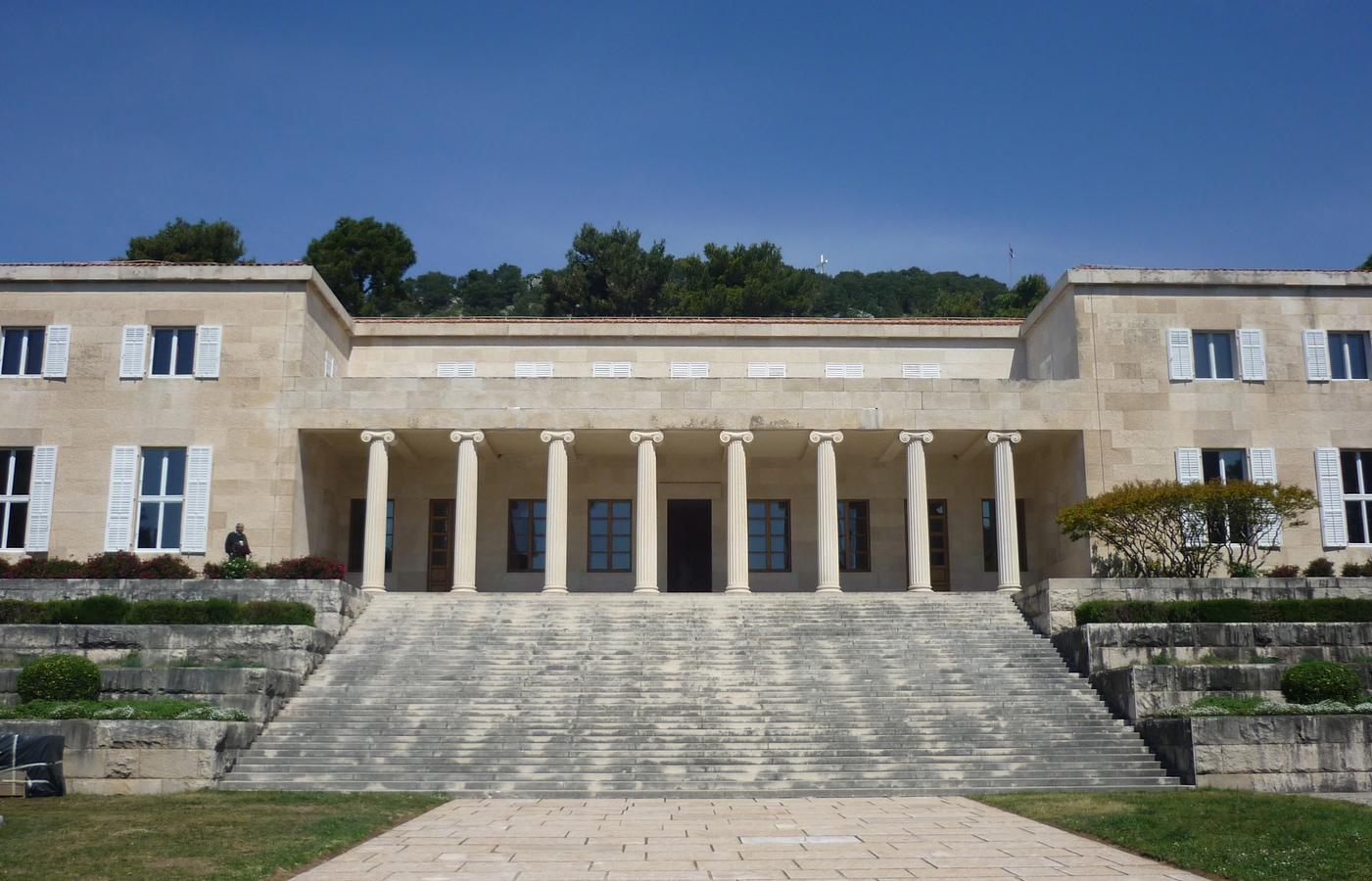
The Ivan Meštrović Gallery (Galerija Ivana Meštrovića) showcases the life work of the most influential Croatian sculptor of the 20th century, and it ranks among the most underrated things to do in Split. The villa itself was designed by Meštrović between 1931 and 1939 as his home and studio, a stone-built mini-palazzo with cypress gardens and a sweeping terrace over the Adriatic. He donated the building and his collection to the Croatian state in 1952; the museum opened the same year.
Inside are around 200 works in stone, bronze, marble, and wood, including the monumental Pieta, the celebrated Roman Pieta, and the standing Cyclops. Across the road the Kastilac (a 16th-century fortified summer residence Mestrovic restored) holds his cycle of carved walnut wood panels on the life of Christ, often considered his masterpiece. A combined ticket of about 12 EUR in 2026 covers both buildings.
Pro Tip: Time your visit to Marjan Hill so the gallery is your descent point: hike up at sunrise, drop in for the air-conditioned museum at midday when it is too hot to climb, then continue down to Kasjuni Beach. The combined experience - the sculptor's home, his work, and the same Adriatic he was looking at - lands much harder than the gallery alone.
9Klis Fortress - Mountaintop Stronghold Above Split
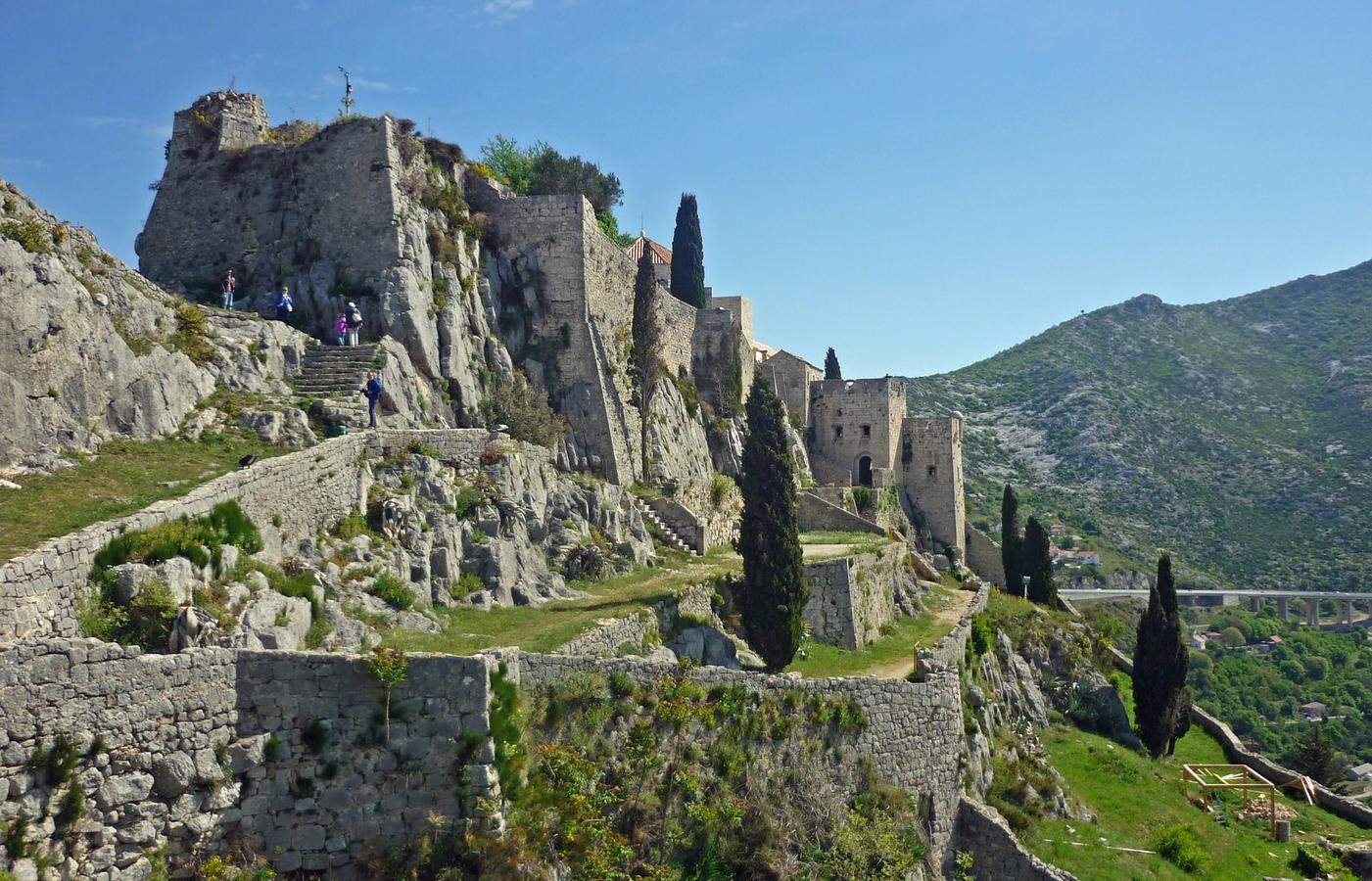
Klis Fortress (Tvrdjava Klis) crowns a narrow rock pass between Mosor and Kozjak mountains 360 metres above the Adriatic and looks straight down at Split's red-tiled old town. The site has been fortified since the Illyrian period; its medieval and Ottoman walls reach back over 2,000 years of continuous defence, making it one of the most rewarding history things to do in Split for visitors who want to escape the cruise crowds.
The fortress was the royal seat of the medieval Croatian kings, fell to the Ottomans in 1537 after a famous siege led by Captain Petar Kruzic, and was retaken by Habsburg forces in 1648. Today you can walk all three defensive levels, climb the upper terraces, and visit a small museum on Croatian-Ottoman wars. Game of Thrones fans will recognise the stone ramparts as the city of Meereen. Entry is around 10 EUR in 2026.
Pro Tip: Combine Klis with Salona on the same half-day. Take Promet Split bus 22 to Klis, walk the fortress for about 1.5 hours, then take a local bus or taxi 7 km down to Solin to wander the Roman ruins. Late afternoon is best: the limestone glows orange at sunset and you can photograph Split, the Brac channel, and Mosor mountains in one frame.
10Salona Ancient Ruins - The Roman Capital of Dalmatia
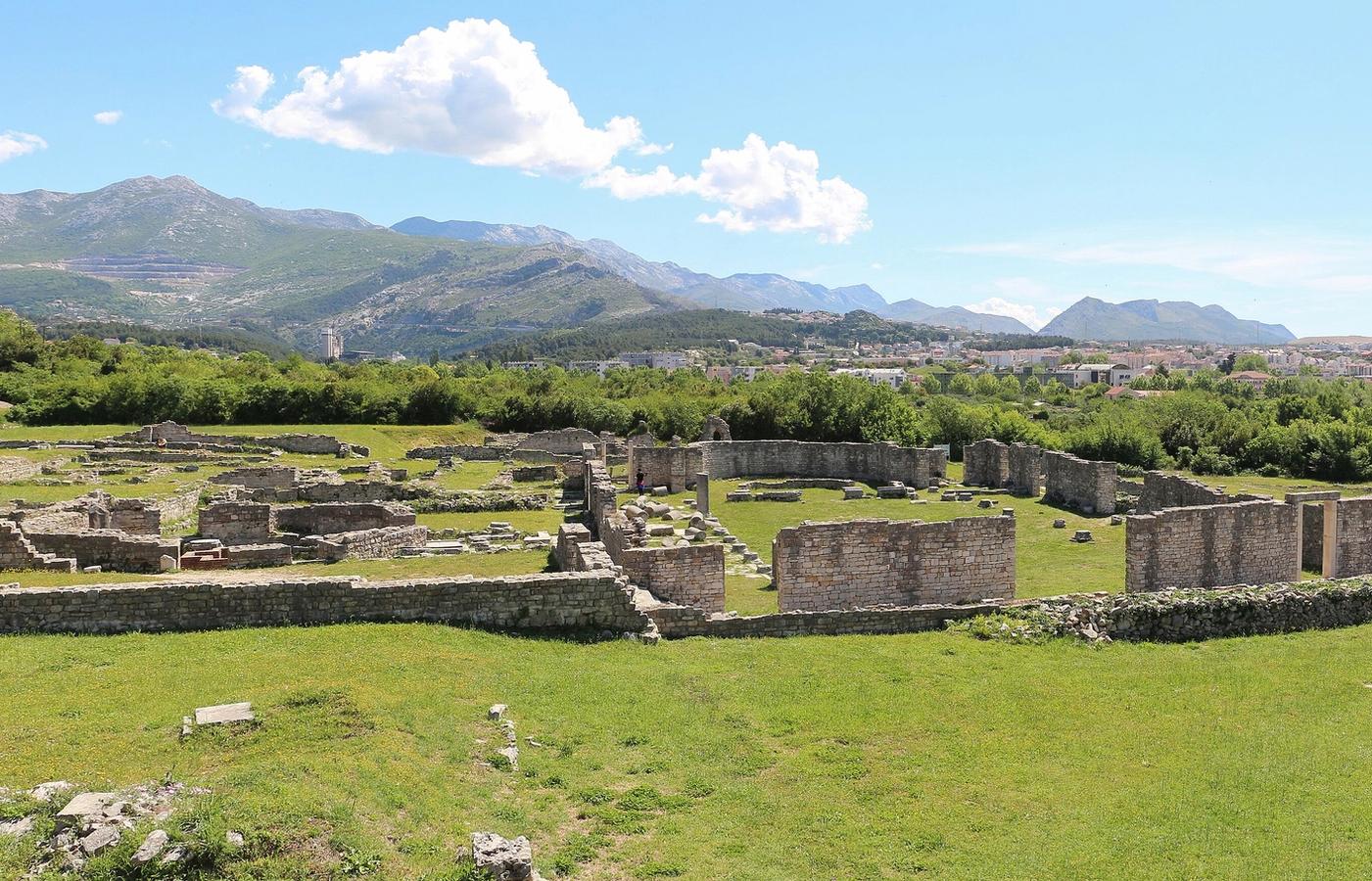
Salona (modern Solin) was the largest Roman city on the eastern Adriatic and the provincial capital of Dalmatia before Diocletian built his palace at Spalato, today's Split. The site is one of the most substantial archaeological things to do in Split, with around 60 hectares of city walls, an amphitheatre that once seated 18,000, an early Christian basilica complex at Manastirine, and the sarcophagi of the first Christian martyrs of Dalmatia.
The city grew from an Illyrian-Greek trading post in the 1st century BC, peaked in the 2nd and 3rd centuries AD with a population estimated at 60,000, and was sacked by the Avars and Slavs in the 7th century - refugees who fled to Diocletian's empty palace founded medieval Split. Diocletian himself was born here around AD 244. Tickets cost about 5 EUR in 2026 and a small on-site museum opens daily.
Pro Tip: Wear proper shoes - the site is open, exposed, and the stones get scorching in midsummer. Start at the Tusculum visitor centre near the Manastirine cemetery for orientation maps, then walk the perimeter walls counter-clockwise to the amphitheatre. Two hours is enough for a confident overview, three if you want to read every plaque.
11Day Trip to Trogir - A UNESCO Island Town 30 Minutes Away
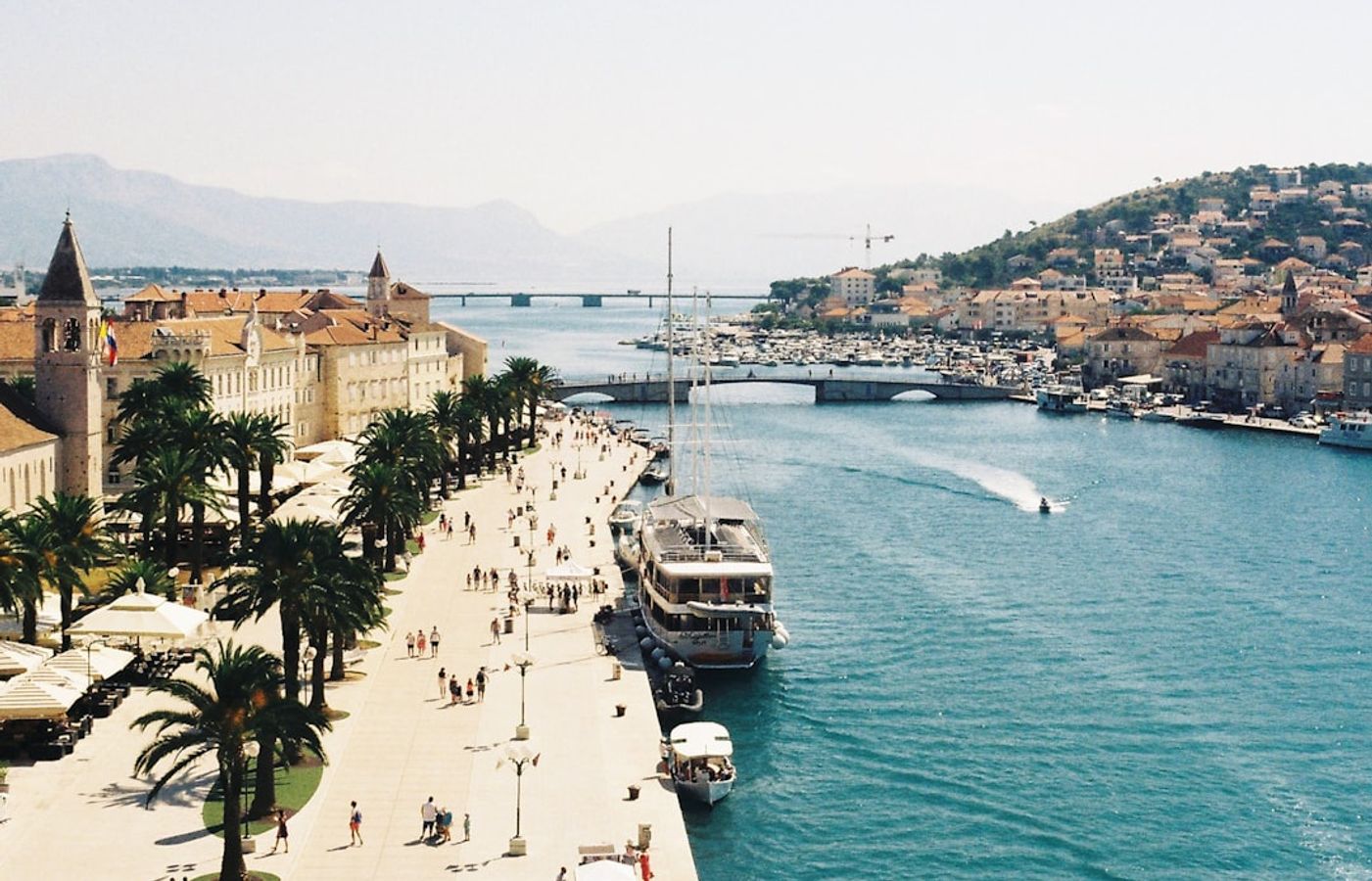
Trogir is a tiny island town set between the Croatian mainland and the larger island of Ciovo, and the easiest of all day-trip things to do in Split. The historic centre is a UNESCO World Heritage Site that has been continuously inhabited for over 2,300 years, packed into a footprint of just 600 by 250 metres. You enter through a stone city gate, cross a square ringed with Venetian palaces, and lose yourself in alleys that have not been widened since the 13th century.
The standout sight is the Cathedral of St. Lawrence (Sveti Lovro), built between 1213 and 1598, whose west portal carved in 1240 by master Radovan is one of the finest pieces of Romanesque sculpture in Europe. The Kamerlengo Fortress at the western tip, the Cipiko Palace, the loggia where medieval judges presided, and the seafront promenade can all be combined into a two-to-three-hour visit.
Pro Tip: Take Promet Split bus 37 from Split rather than driving: parking in Trogir is scarce and expensive in summer, and the bus stops a 200-metre walk from the stone bridge into the old town. Aim to arrive by 09:00 or after 17:00 to dodge the cruise day-trip crowds, and consider returning by ferry to Slatine for a longer scenic loop.
12Day Trip to Krka National Park - Waterfalls of the Krka River
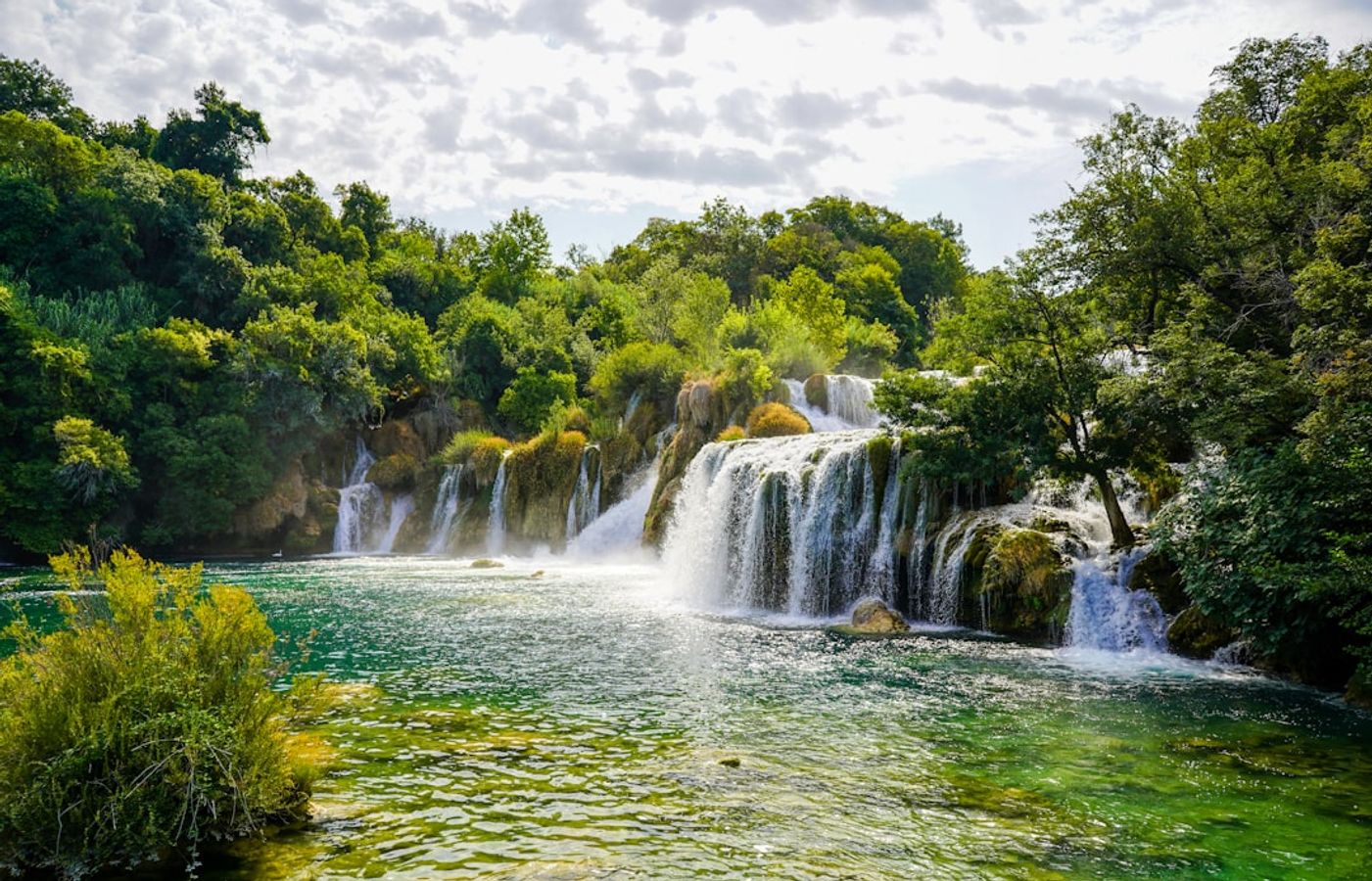
Krka National Park (Nacionalni park Krka) protects a 109-square-kilometre stretch of the Krka River and is one of the most spectacular nature things to do in Split. The headline attraction is Skradinski Buk, a 400-metre-long cascade of 17 limestone-tufa waterfalls that drop the river 46 metres in total over deep emerald pools, all linked by a 1.9-kilometre wooden boardwalk through reedbeds and oak woodland.
Swimming in the main pool has been banned since 2021 to protect the tufa, but the visual payoff remains overwhelming, especially during spring snow-melt and after autumn rain. Boats run upriver from Skradinski Buk to the Visovac Island Franciscan monastery and (in summer) further to the Roski Slap falls. Tickets in 2026 are around 15 EUR in low season and up to 40 EUR in July and August; entry is timed and capped.
Pro Tip: Driving from Split is roughly 1.5 hours each way - leave by 07:30 and use the Lozovac entrance (free shuttle bus to the falls) rather than parking at Skradin in peak season. If you don't want to drive, a half-day Split-based organised tour is the fastest way to combine Krka with a stop at Sibenik Cathedral on the way back.

CEO and co-founder
Tomas is the co-founder and director of trip1, an European company specializing in reservation services. He launched the company in 2025 with a focus on building scalable, efficient operations.
12 Top Things to Do in Split, Croatia - FAQ
No - a realistic plan covers 4 to 5 of these attractions per day. The first 5 entries (Diocletian's Palace, Cathedral of Saint Domnius, Peristyle Square, People's Square, and the Riva) sit inside or next to the old town and can be combined into a single half-day walk. Marjan Hill, Bačvice Beach, and the Meštrović Gallery fill another day in the city. Klis Fortress and Salona work as a paired half-day trip, while Trogir and Krka National Park each justify their own dedicated day.
Start in the old town and work outwards. Day one: Diocletian's Palace, Cathedral of Saint Domnius, Peristyle Square, People's Square, and the Riva, finishing with a swim at Bačvice Beach. Day two: morning walk up Marjan Hill, lunch in Veli Varoš, afternoon at the Meštrović Gallery on the way back. Day three: combine Klis Fortress and Salona by bus or rental car. Add Trogir on day four and Krka National Park on day five if you have the time.
Most of Split's main sights do not require advance booking, but a few benefit from it. The Cathedral of Saint Domnius bell tower has a small ticket counter on site and timed entry slots can sell out in July and August - book online the day before in summer. Krka National Park sells timed entry tickets online and capacity caps apply at Skradinski Buk in peak season, so booking a few days ahead is wise. Klis Fortress, Salona, the Meštrović Gallery, and museums inside Diocletian's Palace generally accept walk-ins year-round. The Riva, Peristyle, People's Square, Marjan Hill, and Bačvice Beach are free.
Budget around 70 to 110 EUR per person for entrance tickets, not counting food, transport, or guided tours. Indicative 2026 prices: Cathedral of Saint Domnius complex ticket (cathedral, crypt, treasury, bell tower) about 7 to 10 EUR, Meštrović Gallery around 12 EUR, Klis Fortress about 10 EUR, Salona around 5 EUR, Krka National Park 15 to 40 EUR depending on season. Trogir Cathedral bell tower is about 3 EUR; the town itself is free to wander. The Riva, Marjan Hill, Bačvice Beach, Peristyle, and People's Square cost nothing.
Strong runners-up include the Split City Museum inside the Papalić Palace, the Archaeological Museum (oldest in Croatia, opened in 1820), the Froggyland taxidermy collection, and the Game of Thrones Museum near the People's Square. For beaches, Kašjuni and Bene on the Marjan peninsula offer quieter alternatives to Bačvice. If you want an island day trip beyond Trogir, fast catamarans reach Hvar town in about an hour and Brač (Bol and the Zlatni Rat beach) in 60 to 90 minutes from the main ferry port.
Yes, both are open year-round in 2026. Diocletian's Palace is a living UNESCO World Heritage Site - its streets, gates, and squares are public space accessible 24/7 and free of charge. The Cathedral of Saint Domnius, the cathedral treasury, crypt, and bell tower keep seasonal hours (typically 8:00 to 19:00 in summer, shorter in winter) and a combined ticket covers the main spaces. The underground Substructures (Cellars) of the palace also operate daily with a separate ticket.
Most are reachable on foot or by Promet Split city bus. Diocletian's Palace, the Cathedral of Saint Domnius, Peristyle Square, People's Square, the Riva, and Bačvice Beach are all within a 15-minute walk of the main bus and ferry terminals. Marjan Hill starts at the western edge of the old town. The Meštrović Gallery is on Promet bus line 12 from the centre. Klis Fortress is reached by Promet bus line 22, and Salona by line 1 toward Solin. Trogir runs on Promet line 37 from the main bus station, and Krka National Park is best reached by a Split-based organised tour or rental car (about 1.5 hours each way).