Guides · Kotor
10 Top Things to Do in Kotor

CEO and co-founder
This guide ranks the 10 top things to do in Kotor, Montenegro - the sights and experiences that genuinely deserve a place on your itinerary, whether you have a single cruise-ship day or a full week on the Bay of Kotor. Each entry comes with an exact address, the nearest bus stop or parking area, and a concrete Pro Tip drawn from on-the-ground details rather than generic advice. We have ordered the list to help you plan efficient routes - Old Town attractions grouped together inside the walls, water-based experiences in a second loop, and mountain day trips for travellers with a car or guided transfer.
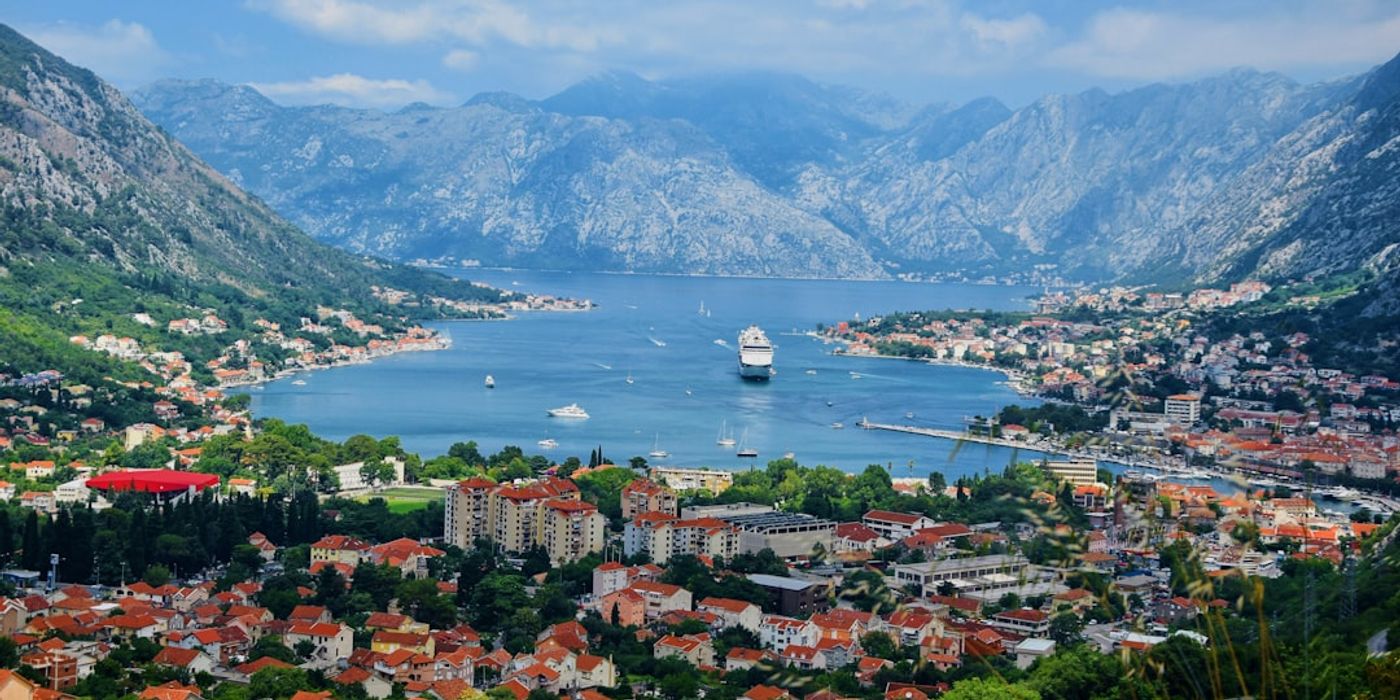
Kotor itself is a tightly compressed UNESCO destination. The walled medieval town, the fortifications climbing the cliff behind it, and the Bay of Kotor that wraps around it form a triple-layered set of attractions that you can comfortably cover in 2-3 days. Add a half-day for Perast and Our Lady of the Rocks, and a full day for Lovcen National Park, and you have the backbone of any solid Kotor travel guide. Practical notes for 2026: the postal code for the Old Town is 85330, the area code is +382 32, the official currency is the Euro, and Tivat Airport (TIV) sits only 8 kilometres away. Wherever possible we have noted opening hours, ticket costs, and the cruise-ship rhythm that shapes the city's crowd levels through the day.
1Kotor Old Town (Stari Grad) - The Walled Medieval Heart of the Bay
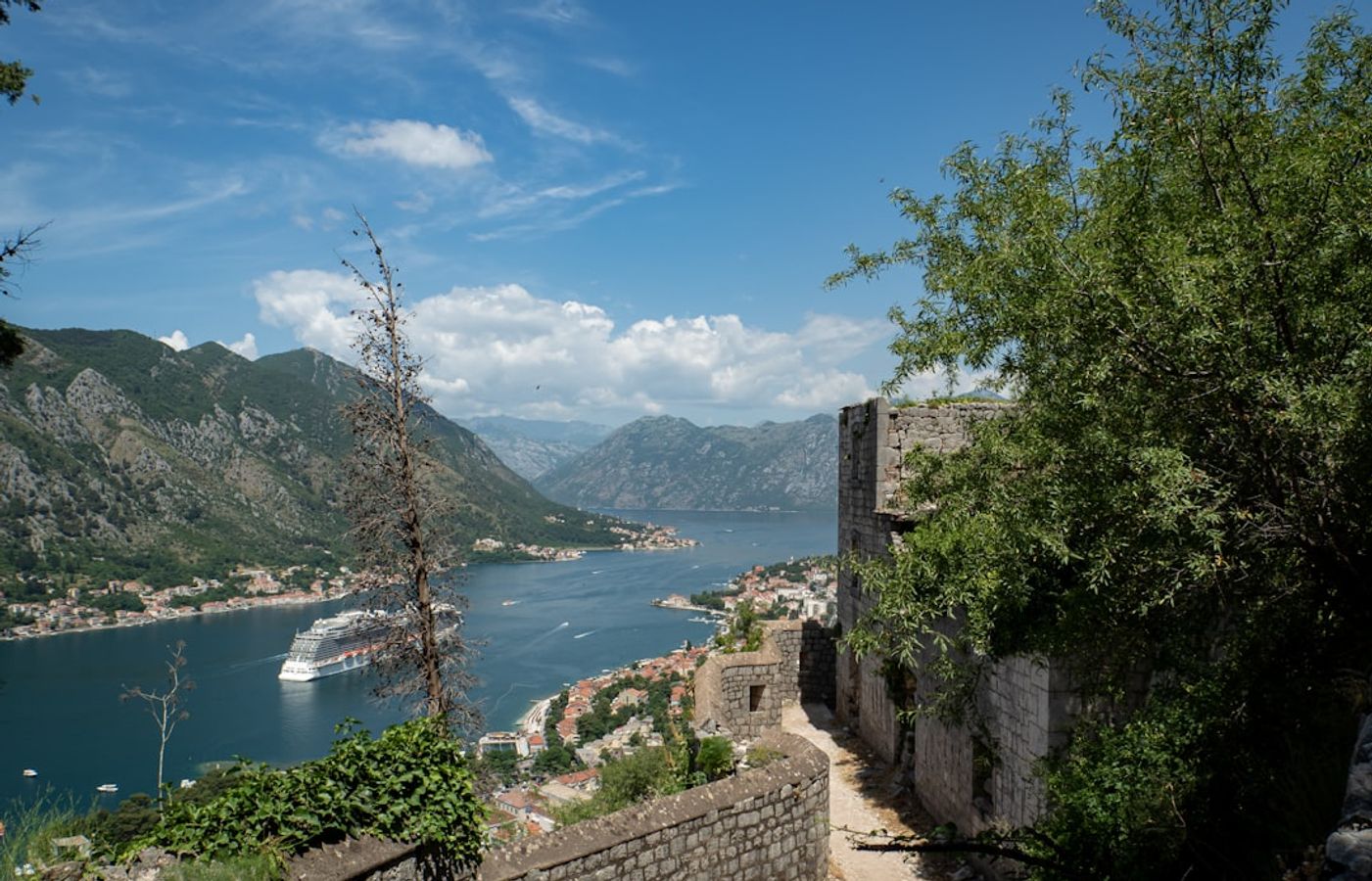
Topping every list of things to do in Kotor, the walled Old Town - Stari Grad in Montenegrin - is the city's UNESCO-listed medieval core and the starting point for almost every visit. Built largely under the Republic of Venice between the 12th and 18th centuries on a triangular footprint between the bay and the cliffs of Mount San Giovanni, it covers roughly 20 hectares of car-free marble lanes, irregular squares, Romanesque churches, and Venetian palaces.
You enter through the Sea Gate (Vrata od Mora), built in 1555, which faces the cruise terminal and the bay. Inside, the layout deliberately confuses - alleys curve and dead-end to slow attackers - and getting briefly lost is part of the experience. Major nodes include Arms Square (Trg od Oruzja), the Cathedral of Saint Tryphon, St Luke's Square, and the famous Cats' Square (Trg od Macaka) named after the resident cat population that has become a symbol of the town.
Pro Tip: Walk the Old Town between 8-10am or after 6pm. Cruise crowds peak from late morning until 4pm, and the marble lanes are at their best in the soft early or evening light.
2San Giovanni Fortress and City Walls - The 1,350-Step Climb Above Kotor
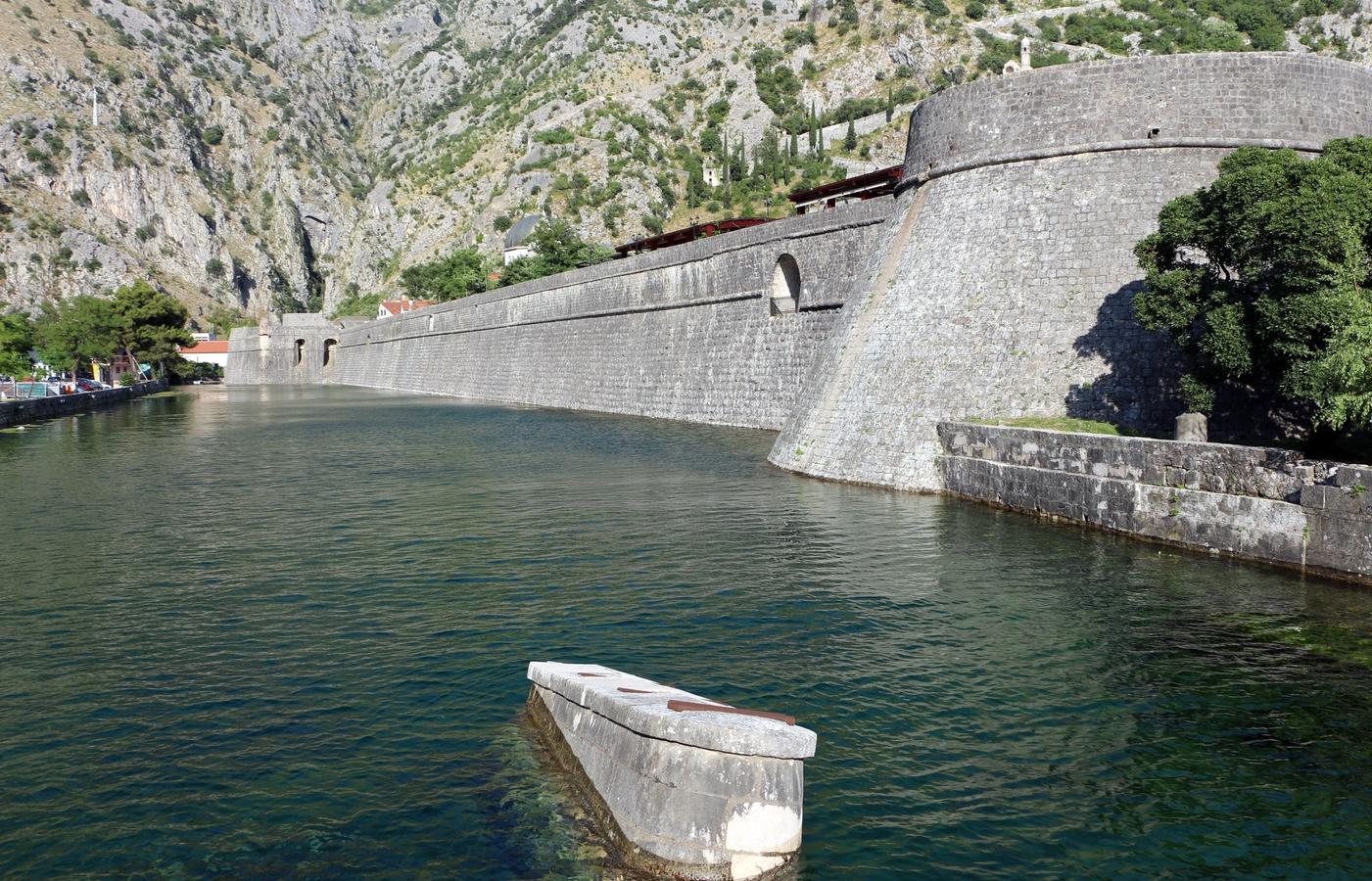
The 4.5-kilometre run of Kotor city walls climbing the cliff to the San Giovanni Fortress (Tvrdjava Sveti Ivan) is the single most photographed attraction on the bay and probably the most rewarding workout you will get anywhere in Montenegro. The path zigzags from the Old Town up to a fortified summit at 260 metres above sea level, passing the Church of Our Lady of Remedy (Crkva Gospe od Zdravlja) roughly halfway up.
The walls themselves were built and rebuilt under Byzantine, Serbian, and Venetian rule, with most of the visible stonework dating to the 14th-18th centuries. Allow 1.5-2 hours for the full round trip on the official route of around 1,350 stone steps. Entry is roughly 15 EUR in summer and free off-season. Wear proper shoes - the limestone is uneven and becomes slippery after rain.
Pro Tip: Start the climb before 9am in summer. There is zero shade above the church, and by 11am the south-facing wall is brutal. Bring at least one litre of water per person.

3Cathedral of Saint Tryphon - Kotor's 12th-Century Romanesque Landmark
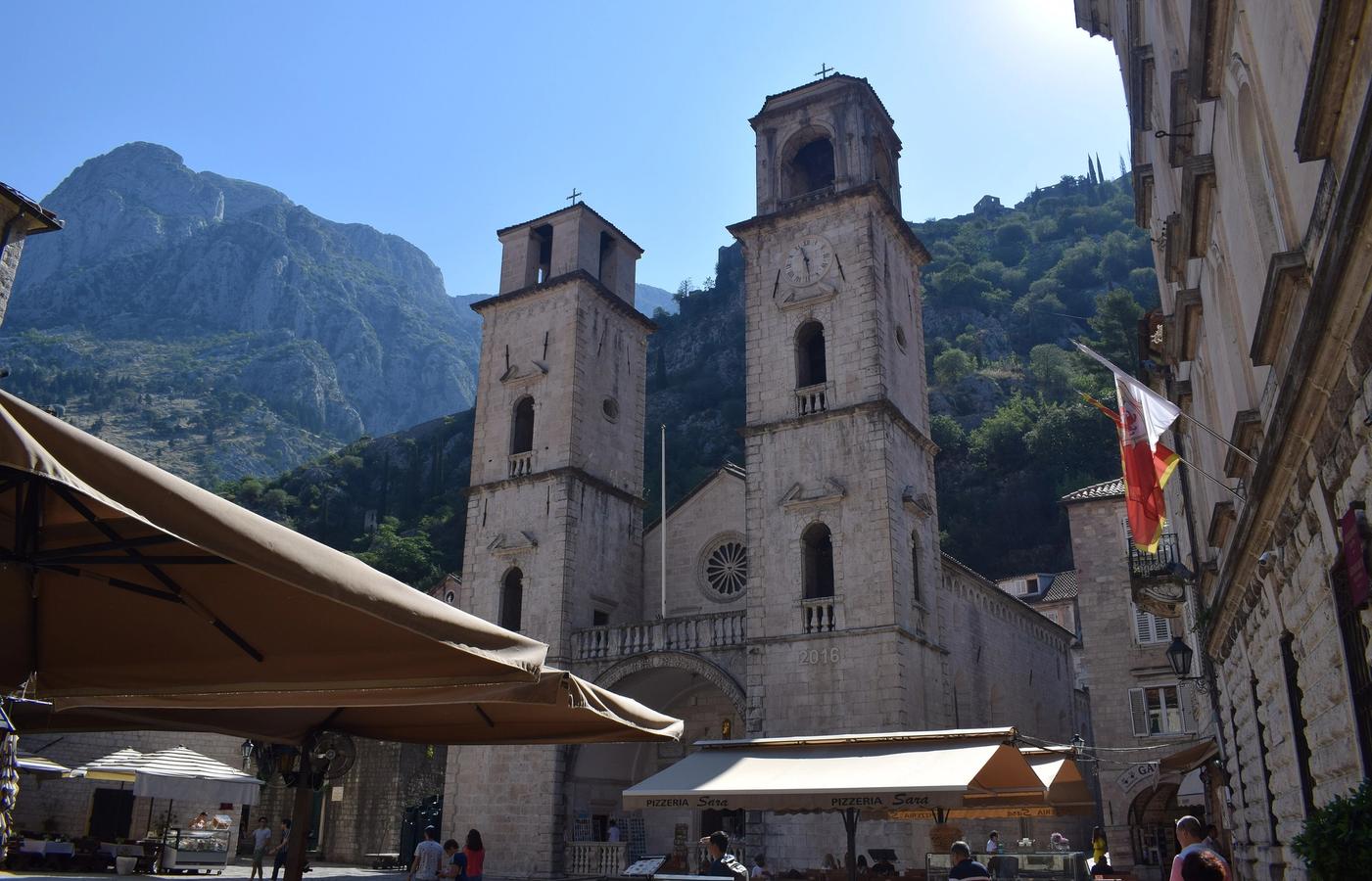
The Romanesque Cathedral of Saint Tryphon (Katedrala Svetog Tripuna) is Kotor's most important religious building and one of the oldest cathedrals in the eastern Mediterranean, consecrated in 1166 on the site of an earlier 9th-century church. Dedicated to the city's patron saint, it has been damaged and rebuilt several times over the centuries - the asymmetric twin bell towers visible today reflect the reconstruction that followed the 1667 Dubrovnik earthquake.
Inside, the cathedral's treasury holds one of the most significant collections of religious silverwork in the eastern Adriatic, including the reliquary of Saint Tryphon, a 14th-century gilded altar ciborium with reliefs of saints, and frescoes recovered after the 1979 earthquake. The interior gives a clear picture of how a single building absorbed Byzantine, Venetian, and Slavic Catholic traditions over nine centuries. A combined ticket with the Bishop's Palace and Sacred Art Museum costs around 5 EUR.
Pro Tip: Sunday morning is the only time you can hear the church bells and the choir together, but the cathedral is closed to tourists during Mass. Either attend the service or come back after 12:30pm.
4Maritime Museum of Montenegro - Three Centuries of Bay of Kotor Seafaring
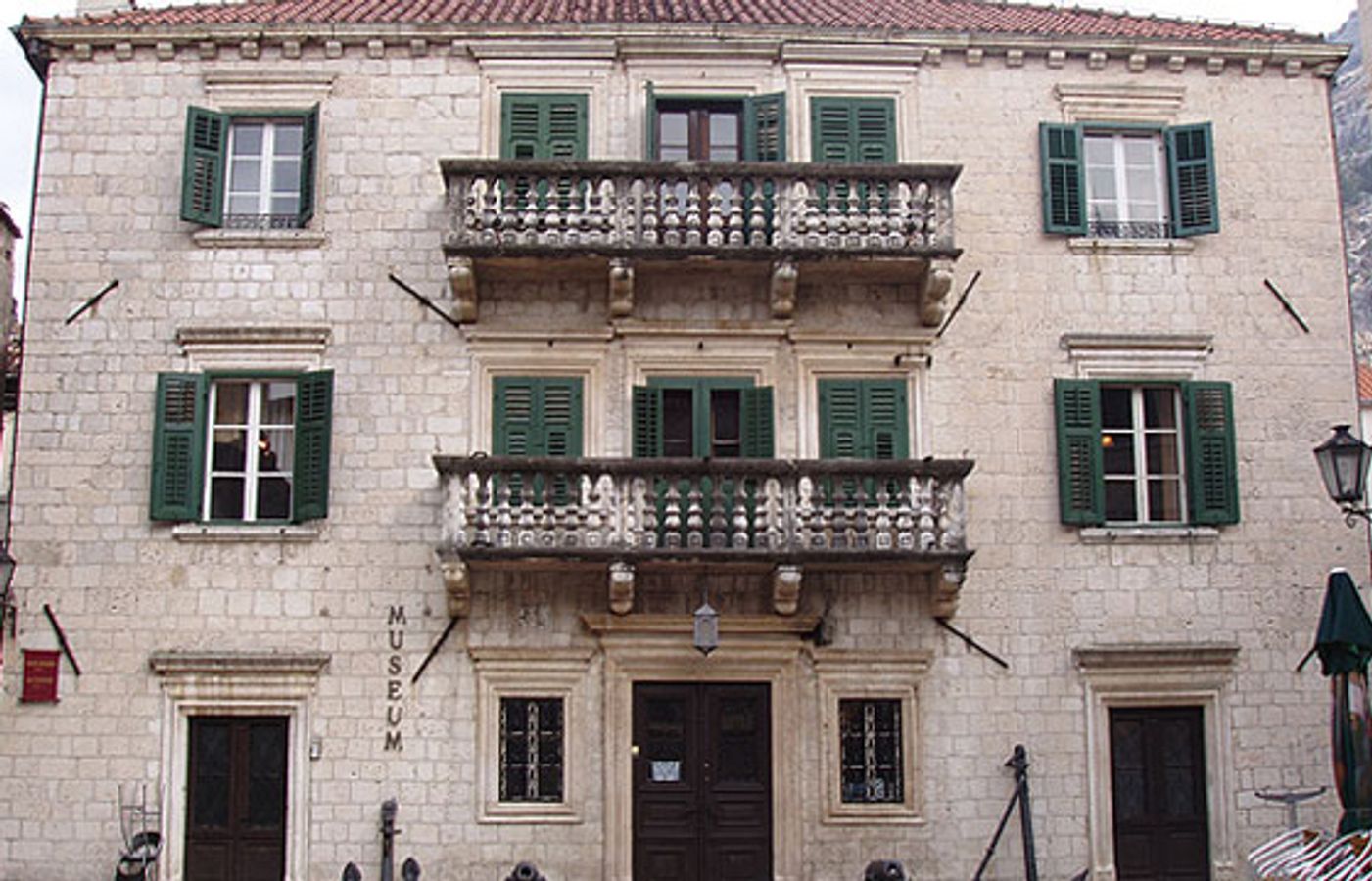
Housed in the early-18th-century baroque Grgurin Palace, the Maritime Museum of Montenegro (Pomorski muzej Crne Gore) is the best place in Kotor to understand how the Bay of Kotor became one of the most important shipping centres in the eastern Adriatic. The collection traces three centuries of local seafaring, from the Bokeljska Mornarica (Boka Navy) guild - one of the oldest sailors' guilds in Europe - through the Venetian merchant captains and on to Austro-Hungarian naval rule.
Highlights include scaled wooden ship models, original portolan charts, ceremonial swords and uniforms, paintings of long-vanished schooners, and the medals and gifts brought home by sea captains from Istanbul, Trieste, and St Petersburg. The English-language audio guide is genuinely useful and turns a half-hour walk-through into a 90-minute deep dive. Tickets cost around 4 EUR.
Pro Tip: Pair the museum with a coffee in the small courtyard cafe next door. The Grgurin Palace's first-floor windows give one of the cleanest frame-shots back into Arms Square - bring a camera.
5Square of Arms (Trg od Oruzja) - Kotor's Historic Main Square
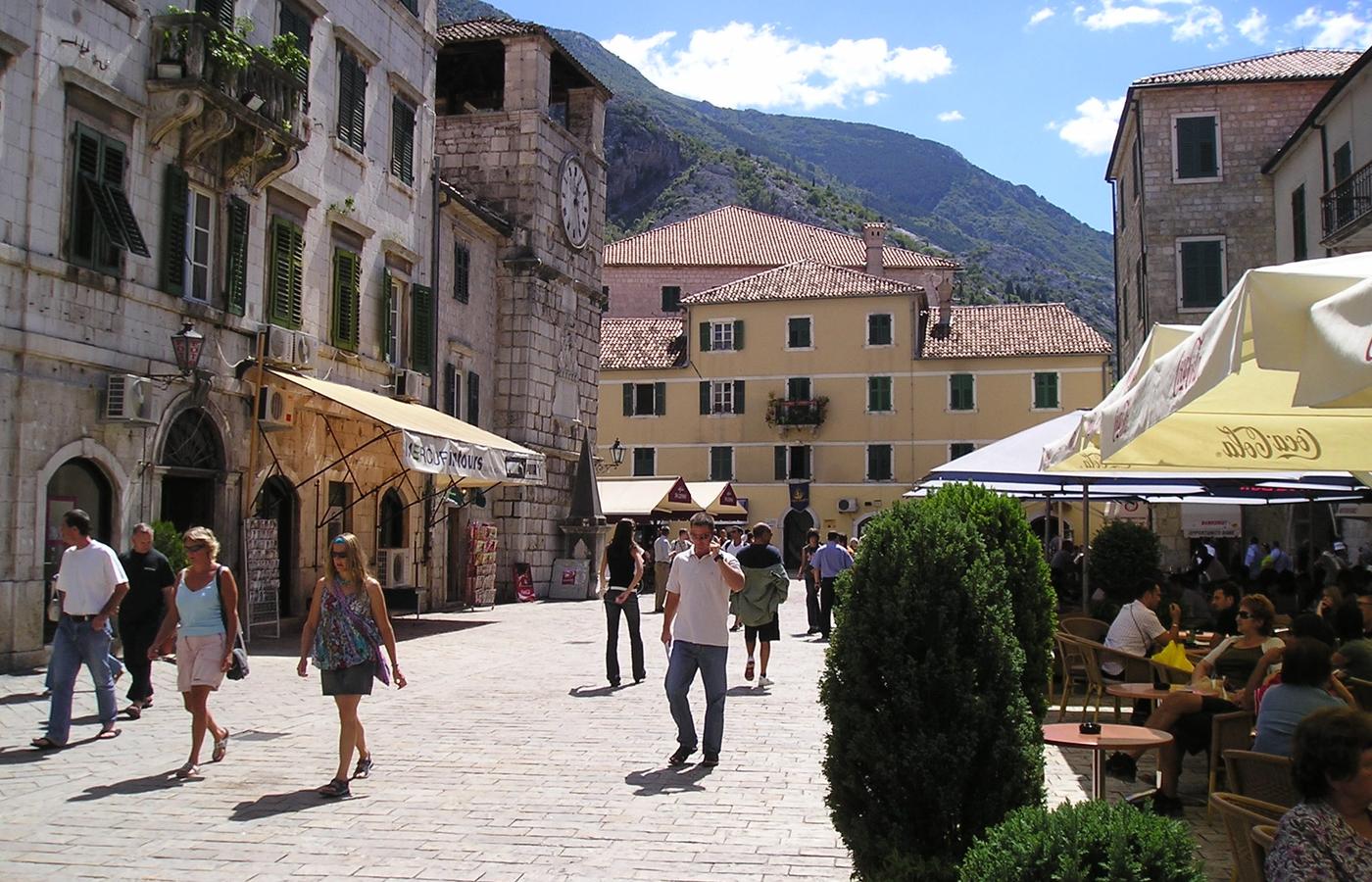
The first space you enter through the Sea Gate is the Square of Arms (Trg od Oruzja), named for the weapons workshops the Republic of Venice ran here in the 14th-18th centuries. It is the largest open square inside the walls and the best place in town to people-watch over a long coffee. Three landmarks frame it: the Clock Tower (Toranj Sata) built in 1602, the small Pillar of Shame in front of the tower where wrongdoers were once chained for public punishment, and the Rector's Palace, now a hotel.
The square is also the natural starting point for any walk through Kotor - all the main lanes radiate from here, and most tour groups regroup at the clock tower. Side-streets lead directly to the Cathedral of Saint Tryphon, the Maritime Museum, and the climb to the San Giovanni Fortress. Even if you visit nothing else on this list, you will pass through this square multiple times a day.
Pro Tip: Order an espresso at one of the south-side cafes in the late afternoon. The clock tower casts a long shadow across the square from about 4pm, which means a cooler seat and a much better photograph.
6Our Lady of the Rocks (Gospa od Skrpjela) - The Bay's Iconic Island Church
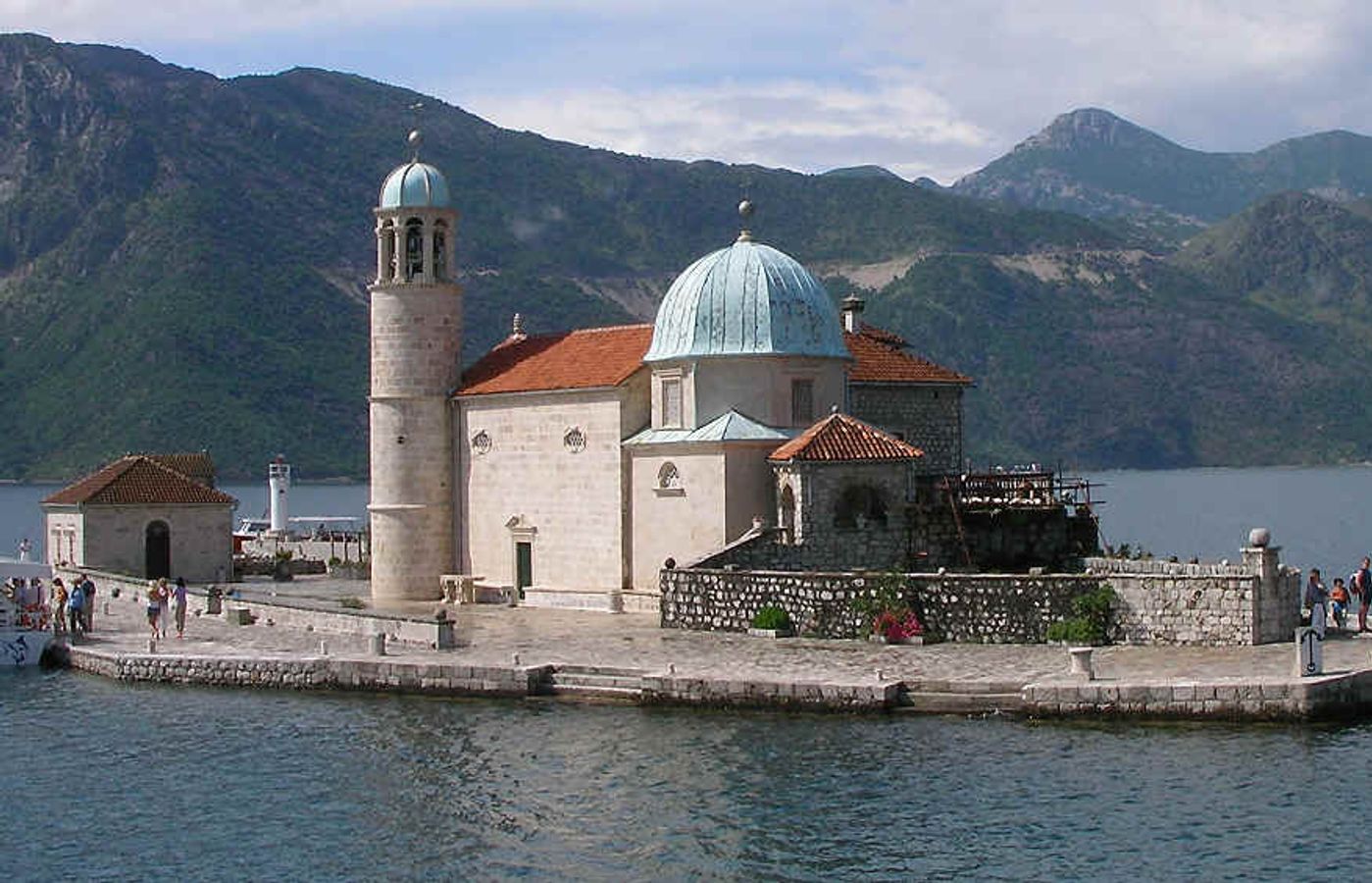
Sitting offshore from the baroque village of Perast, Our Lady of the Rocks (Gospa od Skrpjela) is the only artificial island in the Adriatic and the most-photographed religious site in Montenegro. Local legend dates the island's creation to 1452, when two seafaring brothers found an icon of the Madonna on a sea rock; sailors then dropped stones around the spot for centuries - and sank captured pirate ships - until enough land was built to support a church.
The current 17th-century church is small but unusually rich inside: it holds 68 baroque oil paintings by the Perast-born painter Tripo Kokolja, an embroidered icon stitched by a local woman over 25 years using her own hair, and a votive collection of silver plaques given by grateful sailors. A water taxi from the Perast waterfront costs about 5 EUR each way.
Pro Tip: Combine the visit with the neighbouring natural island of Sveti Djordje, which you can photograph from the boat but cannot land on - it is a private Benedictine cemetery. The Perast-island-Perast loop fits comfortably into a 90-minute half-day from Kotor.
7Perast Old Town - The Bay's Quietest Baroque Village
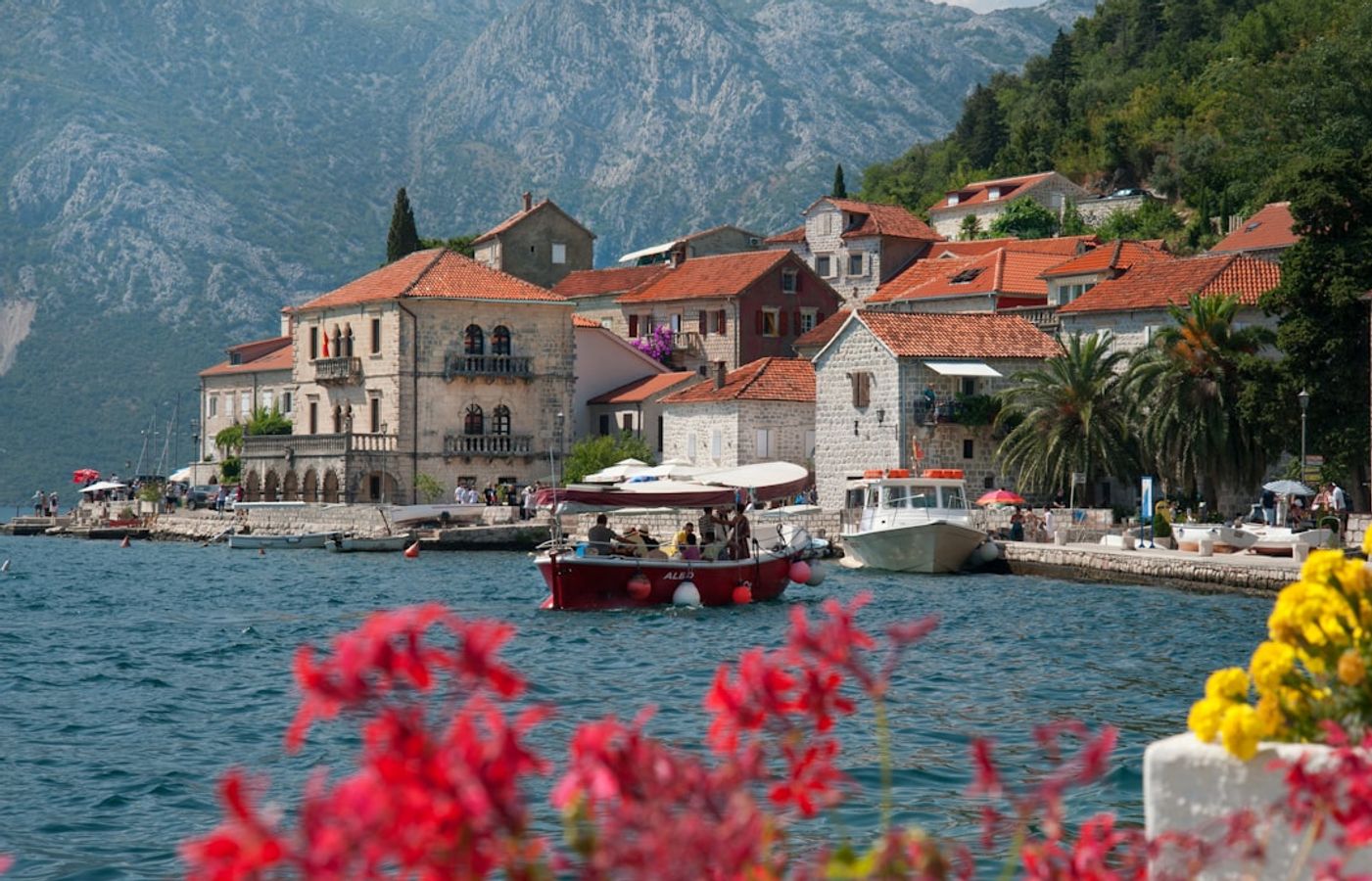
Perast is a single-street stone village strung along the bay between Kotor and Risan, made up of 16 baroque palaces and 17 churches packed into less than a kilometre of waterfront. In the 17th and 18th centuries, when its captains served in the Venetian fleet, it had a population of around 1,600 and a famous nautical school; today it has fewer than 300 permanent residents, which is exactly what makes the trip worthwhile.
The standout building is St Nicholas Church, whose 55-metre bell tower is the highest point in the village and one of the best viewpoints on the entire Bay of Kotor (around 2 EUR to climb). The Perast Museum, housed in the Bujovic Palace, displays portraits, navigation instruments, and battle flags from the village's golden age. The waterfront itself is a slow 15-minute walk end to end.
Pro Tip: Park at the public lot on the main road above Perast (3-5 EUR) and walk down. The village itself is fully pedestrianised, and the descent gives you the postcard angle on Our Lady of the Rocks and Sveti Djordje.
8Lovcen National Park and Njegos Mausoleum - Montenegro's Mountain Pantheon
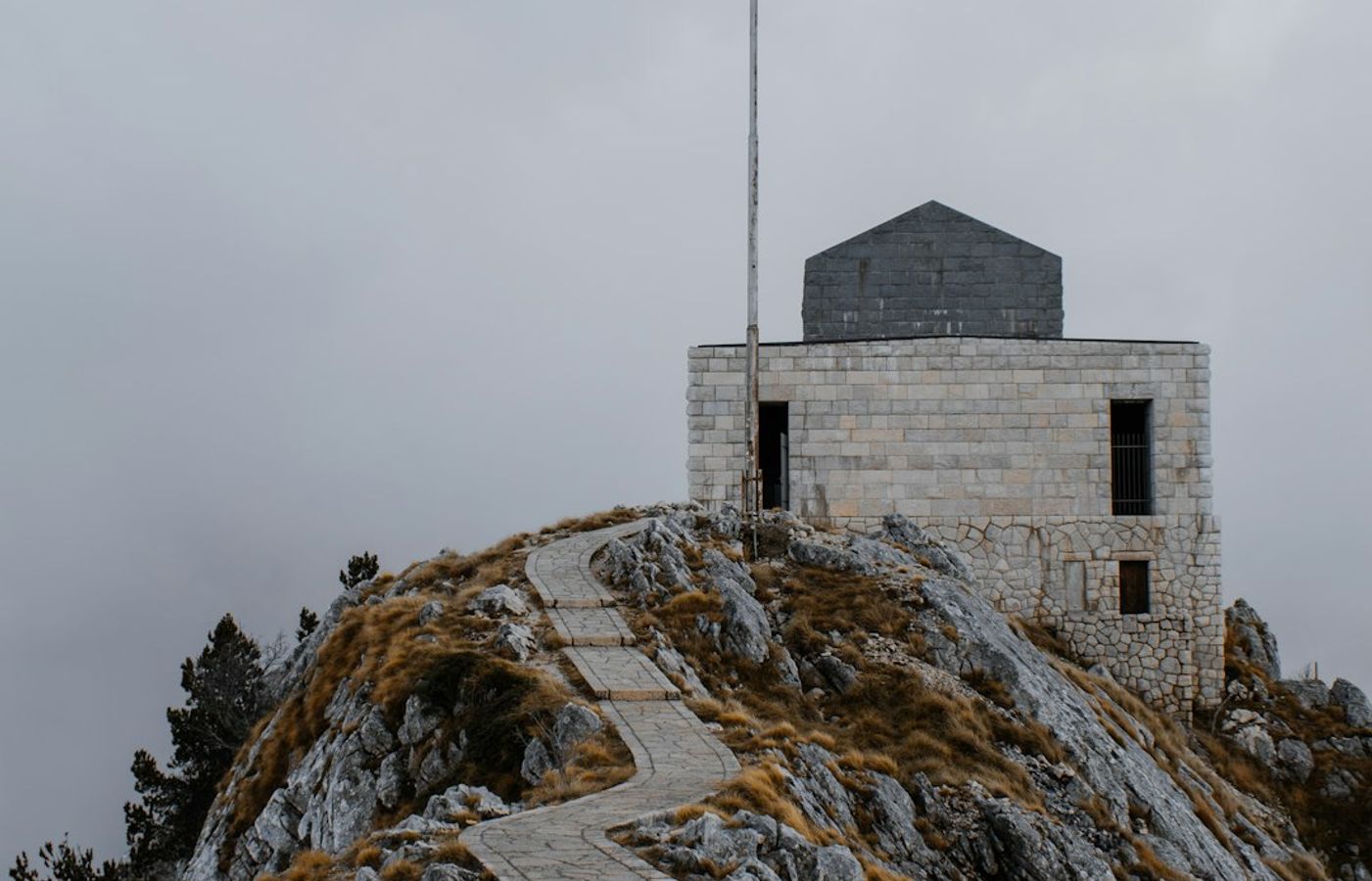
Lovcen National Park is the spiritual heart of Montenegro and the place every visitor with a spare day should add to their list of things to do in Kotor. The park covers 64 square kilometres of black-rock mountain ridges above the bay, topped by the Njegos Mausoleum on the second-highest peak (Jezerski Vrh, 1,657 m). The mausoleum holds the tomb of Petar II Petrovic-Njegos, the 19th-century prince-bishop, philosopher, and poet considered Montenegro's national father figure.
Reaching the tomb requires climbing 461 stone steps through a tunnel cut into the peak, with the final platform giving 360-degree views over the bay, the Adriatic, and on clear days as far as Albania. The drive up from Kotor on the Kotor Serpentine Road is itself an attraction - 25 hairpin switchbacks with viewpoints over the entire Bay of Kotor. Park entry is around 5 EUR; mausoleum entry 3 EUR.
Pro Tip: Drive up to Lovcen and return via Cetinje, the old royal capital, rather than the same serpentine. The loop adds 20 minutes but lets you see two of the four highlights of inland Montenegro in a single day without backtracking.
9Aquarium Boka - Montenegro's Only Public Aquarium
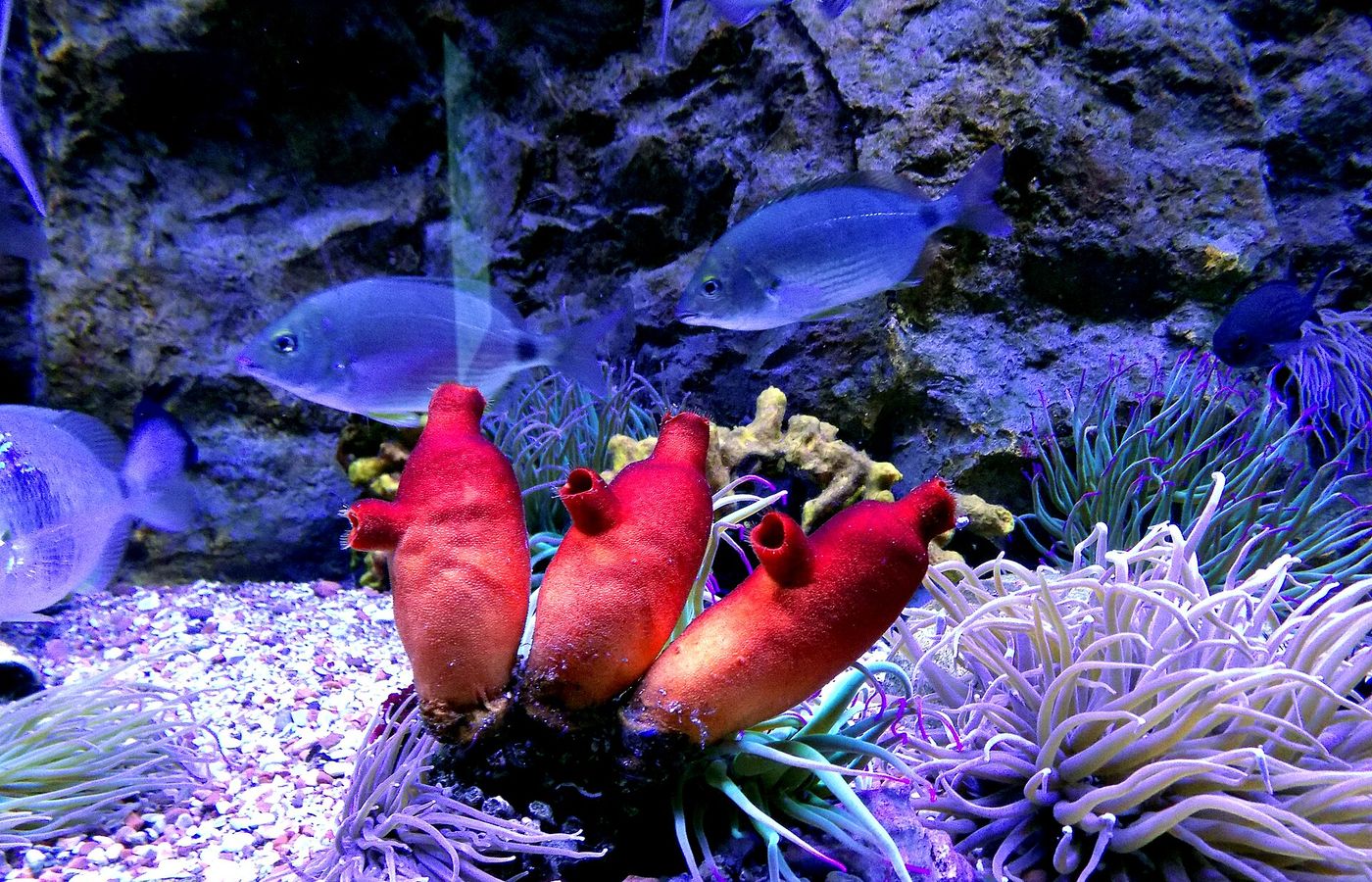
Opened in June 2021, Aquarium Boka is the first and only public aquarium in Montenegro, run by the Institute for Marine Biology of the University of Montenegro. It is small by global standards but unusual in scope: every species on display is native to the Adriatic, with a focus on the marine life of the Bay of Kotor specifically. The institute uses the building for both public education and active conservation research.
The 20-tank route walks visitors through the bay's ecosystems - shallow seagrass meadows, sandy bottoms, deep-water rocky habitats - and includes living examples of European seabass, gilthead bream, common octopus, scorpionfish, and several jellyfish species. Bilingual information panels in Montenegrin and English explain the conservation work the institute carries out around the bay. Entry is around 5 EUR, and a typical visit lasts 45 minutes.
Pro Tip: This is the rainy-day backup nobody talks about. When summer thunderstorms shut down the city walls and the boat tours, the aquarium is open, indoor, and almost empty. Combine it with a long lunch at one of the Dobrota waterfront seafood restaurants.
10Bay of Kotor Boat Tour - The Best Way to See the Fjord-Like Coast
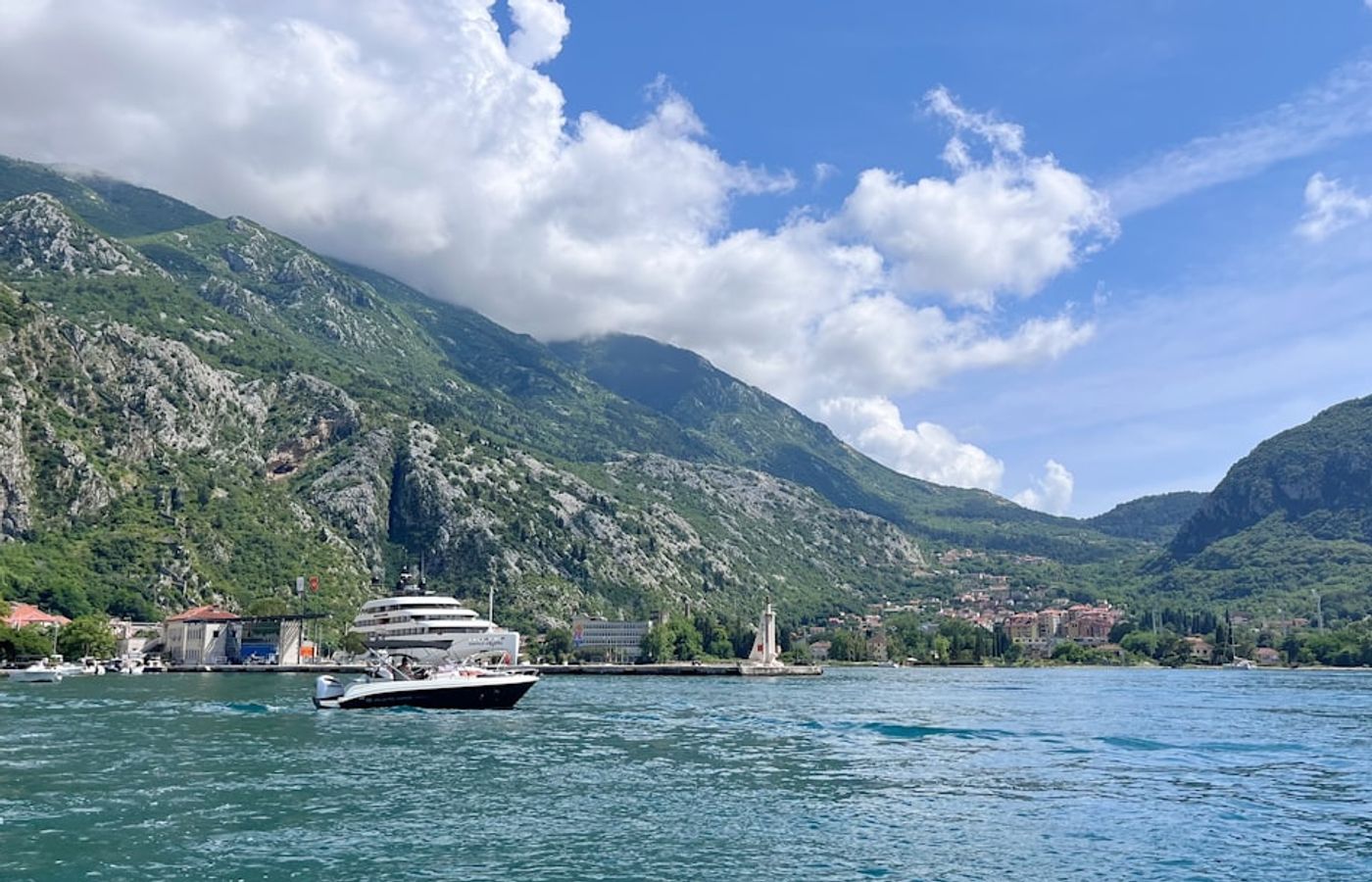
For all the climbing and walking on this list, none of the other top things to do in Kotor capture the geography of the Bay of Kotor (Boka Kotorska) the way a boat does. A standard half-day tour from the Old Town pier covers Our Lady of the Rocks off Perast, the natural island of Sveti Djordje, the abandoned military submarine pen at Lustica, the Blue Cave (Plava Spilja), and a swimming stop in the open Adriatic.
The bay itself is a 28-kilometre, four-section ria that geologists describe as a submerged river canyon - the only formation of its kind on the Mediterranean coast. From sea level, the limestone cliffs of Orjen (1,894 m) and Lovcen (1,749 m) rise almost vertically out of the water on either side. Small group tours run 25-40 EUR per person; private speedboat charters start at around 120 EUR for four hours.
Pro Tip: Book a boat that leaves at 8:30am rather than the popular 10am slot. You get the Blue Cave almost to yourself before the second wave of tour boats arrives, and the morning light on the bay is far better for photographs.

CEO and co-founder
Tomas is the co-founder and director of trip1, an European company specializing in reservation services. He launched the company in 2025 with a focus on building scalable, efficient operations.
10 Top Things to Do in Kotor, Montenegro - FAQ
No - a realistic plan covers 4-5 attractions per day in Kotor. The Old Town, Square of Arms, Cathedral of Saint Tryphon, and Maritime Museum cluster inside the walls and easily fit a single morning. The San Giovanni Fortress climb is its own half-day on top. Day-trip destinations like Perast, Our Lady of the Rocks, and Lovcen National Park each need a half or full day on their own, so plan on two to three days minimum to cover the full list.
Spend Day 1 inside the walls: the Old Town, Square of Arms, Cathedral of Saint Tryphon, and the Maritime Museum, finishing with the San Giovanni Fortress climb in the late afternoon when the heat has dropped. Use Day 2 for the bay - a morning boat tour or bus to Perast, then Our Lady of the Rocks - and squeeze in Aquarium Boka if you have time. Save Day 3 for Lovcen National Park and the drive over the Kotor Serpentine.
None of the 10 attractions strictly require advance booking, but two are worth pre-booking in July and August. The city walls and San Giovanni Fortress have peak-summer entry queues that can run 30-45 minutes at midday, and an online ticket lets you skip them. Popular Bay of Kotor boat tours - especially the small-group Blue Cave and Our Lady of the Rocks combinations - regularly sell out on cruise-ship days, so book 24-48 hours ahead.
Budget around 70-95 EUR per person to do everything on this list once, excluding food and transport. The big-ticket items are the San Giovanni Fortress walls (around 15 EUR in summer, free off-season), a Bay of Kotor half-day boat tour (25-40 EUR), and the Lovcen day trip (5 EUR park entry, 3 EUR mausoleum, plus 20 EUR fuel or 30-40 EUR per person on a shared tour). The Old Town itself, Square of Arms, and Perast Old Town are all free to walk through.
Yes, but plan the day carefully. Start the San Giovanni Fortress climb at 7-8am to be back in the Old Town by 11am, then take a Blue Line bus or taxi to Perast (25-30 minutes), grab a water taxi to Our Lady of the Rocks for 30-45 minutes on the island, and return to Kotor by 4pm. It is a full day, so skip the climb if you have been on a long flight the previous evening.
Eight of the 10 are reachable on public transport. Everything inside the Old Town - the cathedral, the walls trailhead, the Maritime Museum, the Square of Arms - is walkable from Kotor's main bus station. Perast and Our Lady of the Rocks are reached by Blue Line buses and water taxis. Aquarium Boka is on the Kotor-Dobrota bus route. Lovcen National Park is the exception: you need a rental car, a taxi, or an organised day tour - there is no public bus to the mausoleum.