Guides · Berlin
Berlin in One Day: A Gallery Weekend Travel Guide

co-founder
This is a one-day Berlin itinerary built around Gallery Weekend Berlin 2026. It covers Kreuzberg, Oberbaumbrücke, Hamburger Bahnhof, and Lina Lapelytė's installation, the emotional center of the weekend. Practical information, opening hours, transit details, and ticket prices for each stop are included.
I went to Berlin for one day on April 30th, 2026 to see Lina Lapelytė's installation We Make Years Out of Hours during Gallery Weekend Berlin. As co-founder of trip1.com, I wanted to write this from a place I had actually walked, eaten in, photographed, and thought about, not from a press kit. What follows is the exact route I took, the practical details I wish I had before going, and the reflections that stayed with me afterwards.
Berlin always feels less like a city and more like an argument about time. I flew in from Vilnius for less than twenty-four hours simply to spend several hours inside Hamburger Bahnhof, a former railway station transformed into one of Europe’s most powerful contemporary art spaces.
1Gallery Weekend Berlin 2026 - The City's Biggest Contemporary Art Event
Gallery Weekend Berlin is the city's largest annual contemporary art event, run over the last weekend of April. Over 50 leading galleries and institutions open new exhibitions, performances, and commissions on the same three days, with most participating venues offering free admission and extended opening hours. The 2026 edition anchored around Lina Lapelytė's We Make Years Out of Hours at Hamburger Bahnhof, with simultaneous openings across Mitte, Kreuzberg, Schöneberg, and Charlottenburg.
By nightfall during the opening weekend, the exterior of Hamburger Bahnhof glowed in blue and green light against the cold spring sky. Crowds gathered outside while conversations drifted between Lithuanian, German, English, and French - the particular multilingual hum that Berlin generates during its best cultural moments.
Pro Tip: Gallery Weekend Berlin runs the last weekend of April each year. Major museum openings (like Hamburger Bahnhof's Historic Hall installations) require online booking; private gallery openings are walk-in friendly with longer hours on Saturday. A BVG AB day ticket at EUR 10.60 covers travel between every venue.
2Kreuzberg - What to See in Berlin's Most Layered Neighbourhood
Before arriving at the museum, I wandered through Kreuzberg. Walking through Kreuzberg is always a strangely funky experience - not 'funky' in the superficial tourist sense, but in the way the district constantly collides aesthetics, politics, migration, subculture, and fatigue into one continuous urban improvisation. Almost any short list of things to do in Kreuzberg, Berlin starts here, even before the bakeries, the murals, and the bridges.
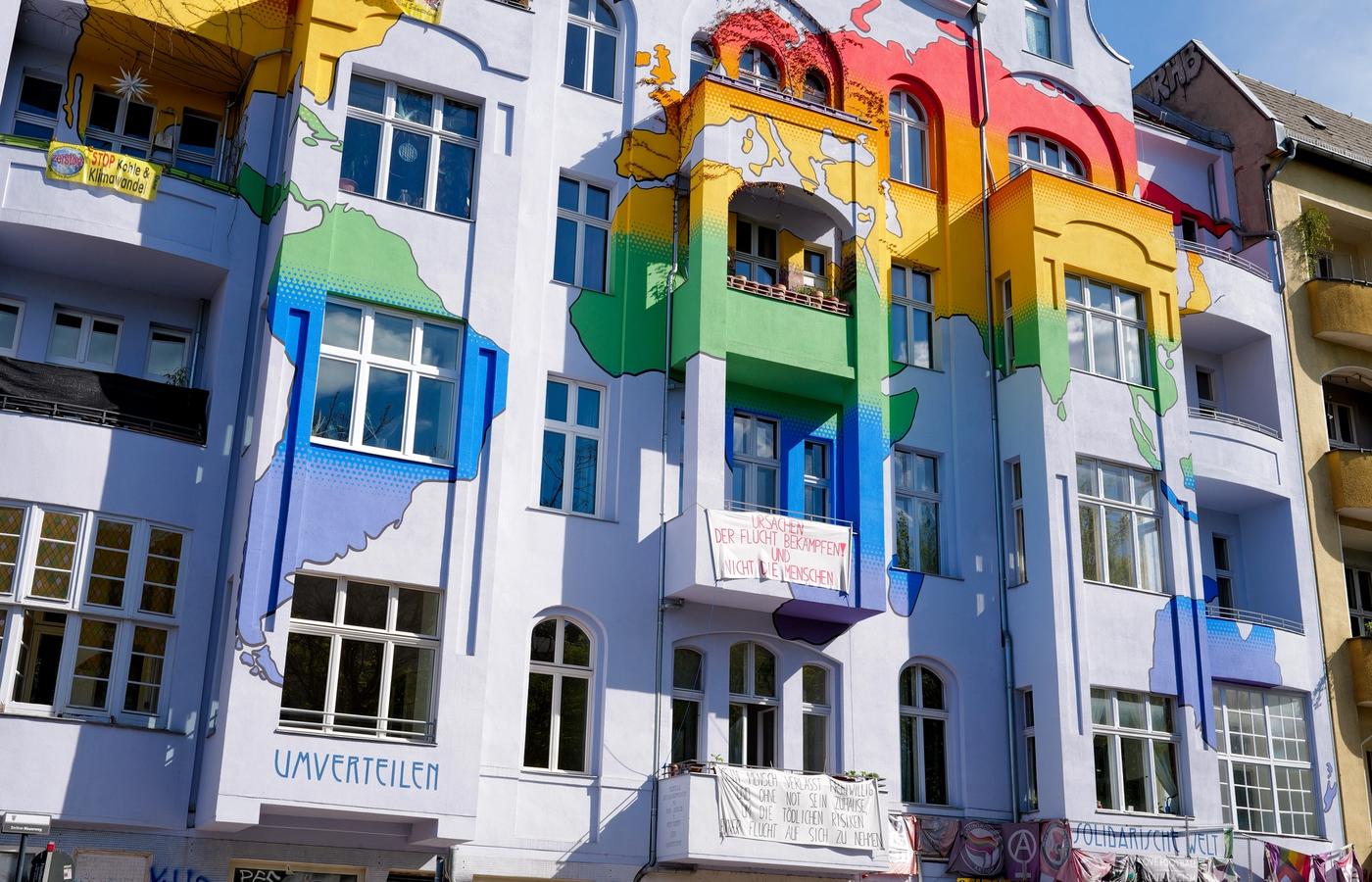
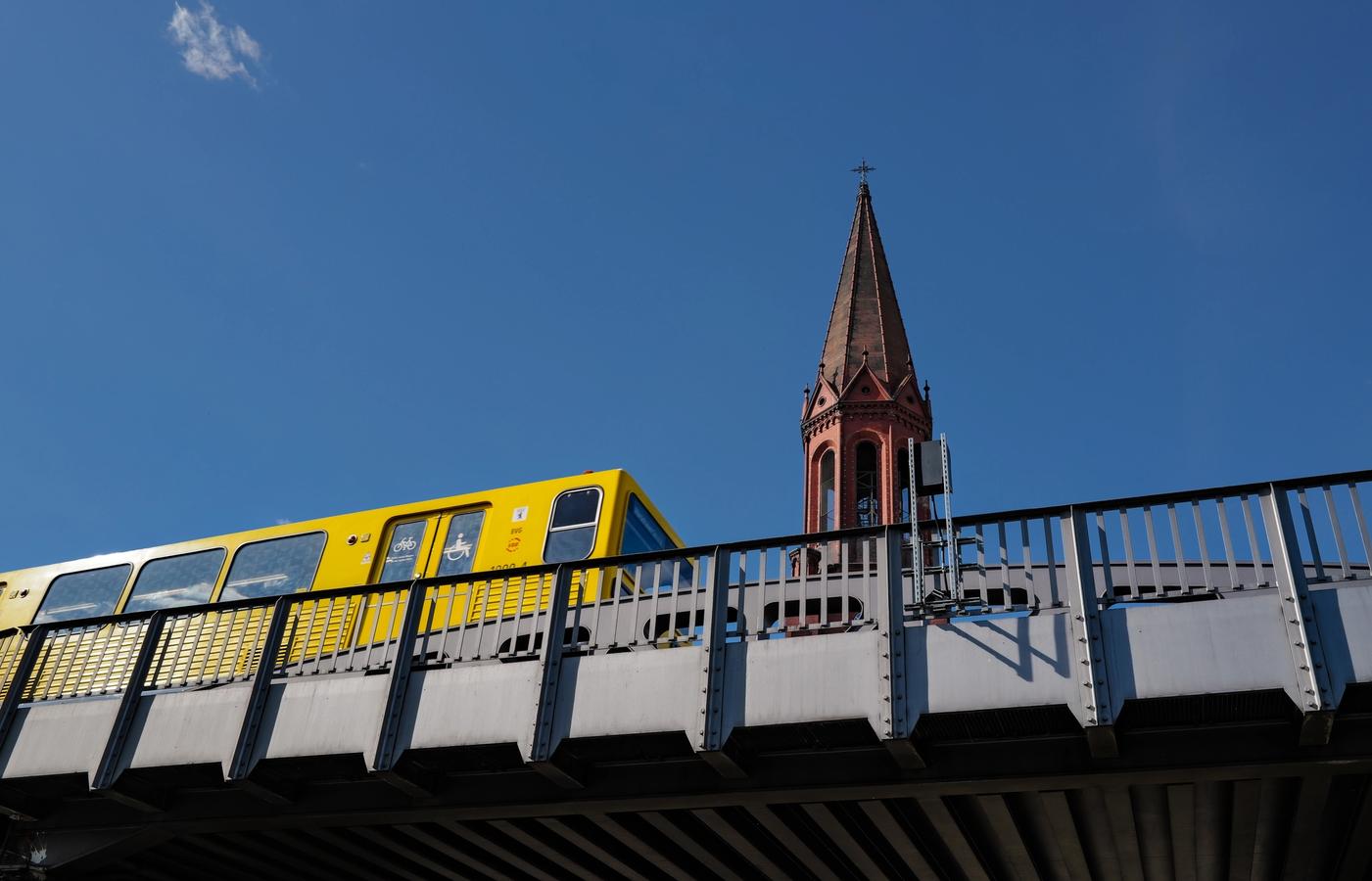
A yellow U-Bahn train cuts across steel bridges above the streets while church towers emerge unexpectedly behind industrial infrastructure. Murals cover entire apartment facades with utopian slogans fading slowly under weather and time. Gothic brick arches beneath Oberbaumbrücke resemble something between medieval Europe and a post-industrial film set, and the bridge itself is one of the most photographed sights in Berlin for a reason.
Kreuzberg never appears fully finished. It feels permanently transitional, as if the district itself resists stabilisation. Graffiti, cafés, Turkish bakeries, techno posters, bicycles, construction sites, abandoned corners, rainbow-painted facades, and improvised art coexist without attempting to become coherent. Perhaps this is why Berlin remains culturally magnetic: the city allows contradictions to remain visible.
Pro Tip: Kreuzberg rewards slow walking. Give yourself 90 minutes minimum, and start from Kottbusser Tor before looping east toward the Spree. Best image angles: rainbow-painted facades on Oranienstraße, the elevated U-Bahn line above Skalitzer Straße, and the layered streetscape near Görlitzer Park.

3Oberbaumbrücke - Berlin's Most Cinematic Bridge
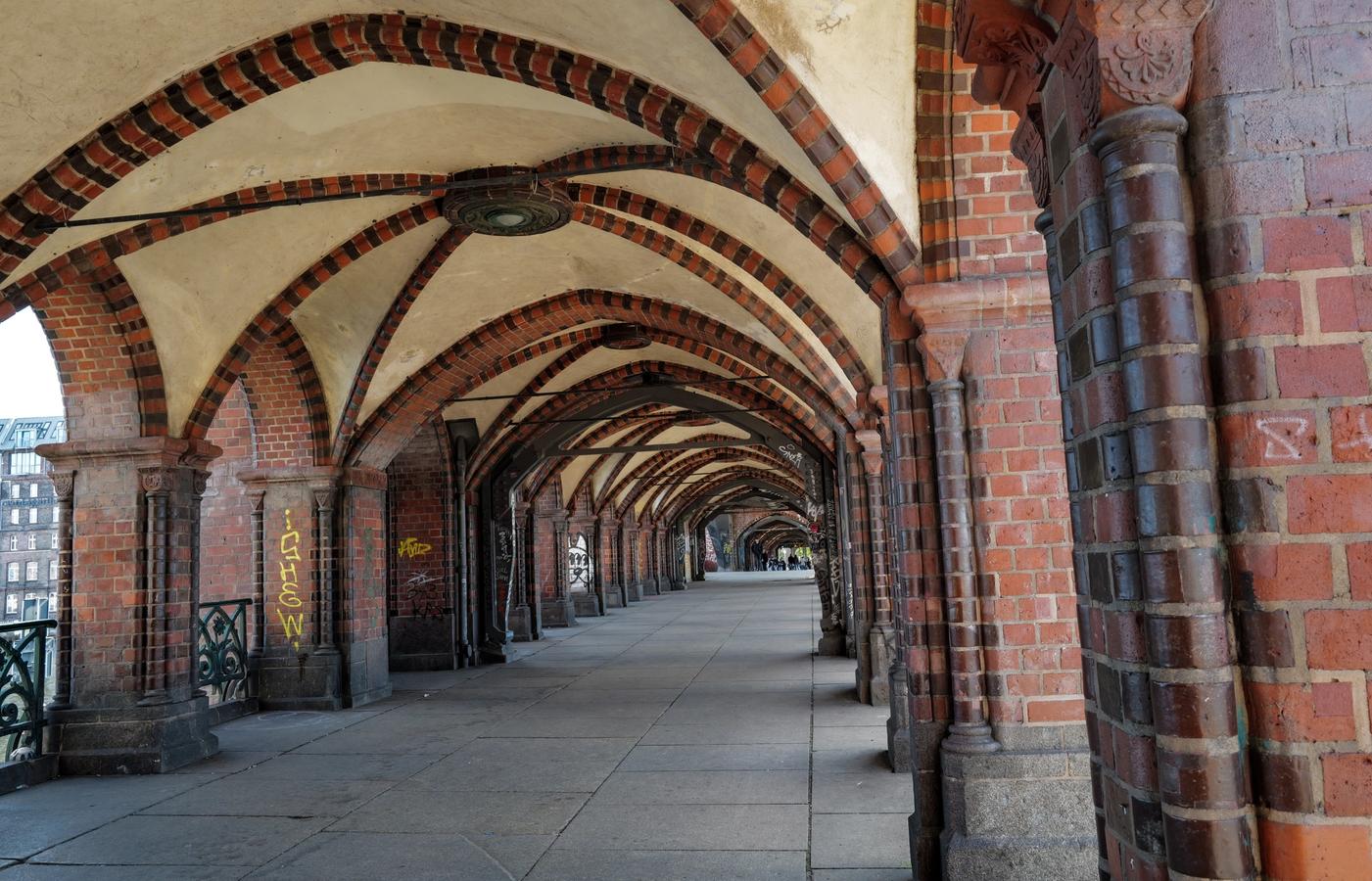
Crossing Oberbaumbrücke is the natural midday pause on any Berlin one-day itinerary. Built in 1896 over the Spree, reconstructed after Second World War damage, and split by the Cold War until 1989, the bridge connects Kreuzberg with Friedrichshain and carries the U1 line above pedestrians and cyclists.
The two brick towers and central gothic walkway are among the most cinematic pieces of architecture in Berlin, the sort of frame that ends up in every shortlist of things to see in Berlin in one day. Standing beneath its arches, you understand why Berlin remains one of Europe's most visually compelling cities.
Pro Tip: Light is best at Oberbaumbrücke in late morning or golden hour. Both directions offer strong photographic compositions, particularly the view of the Spree and the Gothic brick arches beneath the bridge.
4Hamburger Bahnhof - Berlin's Best Contemporary Art Museum
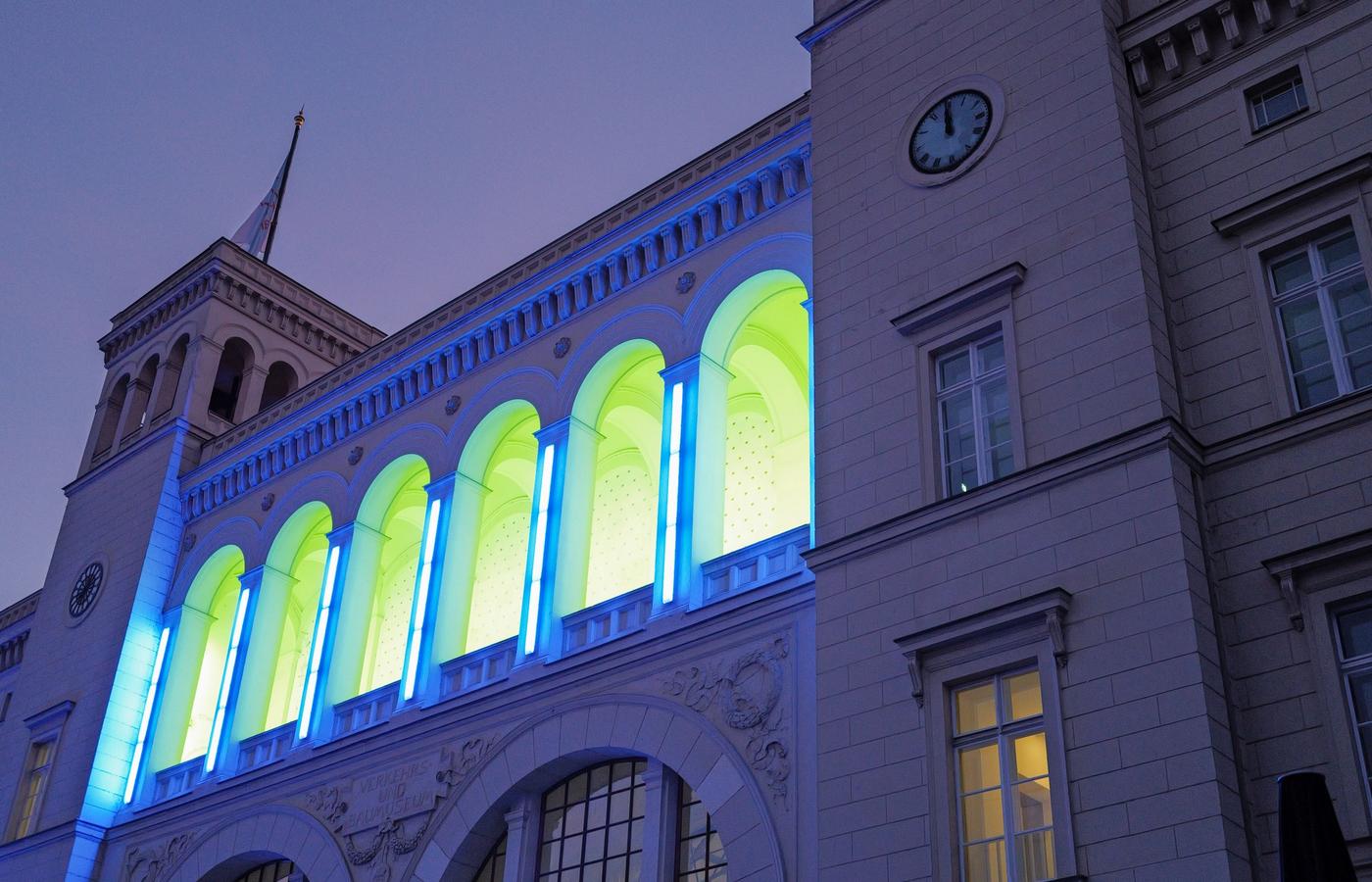
By late afternoon, I made my way to Hamburger Bahnhof - Museum für Gegenwart, Germany's leading museum of contemporary art. The museum is a former 19th-century railway terminus transformed into the city's primary home for post-1960 work by Joseph Beuys, Andy Warhol, Anselm Kiefer, and Cy Twombly, alongside an ambitious rotating programme of new commissions.
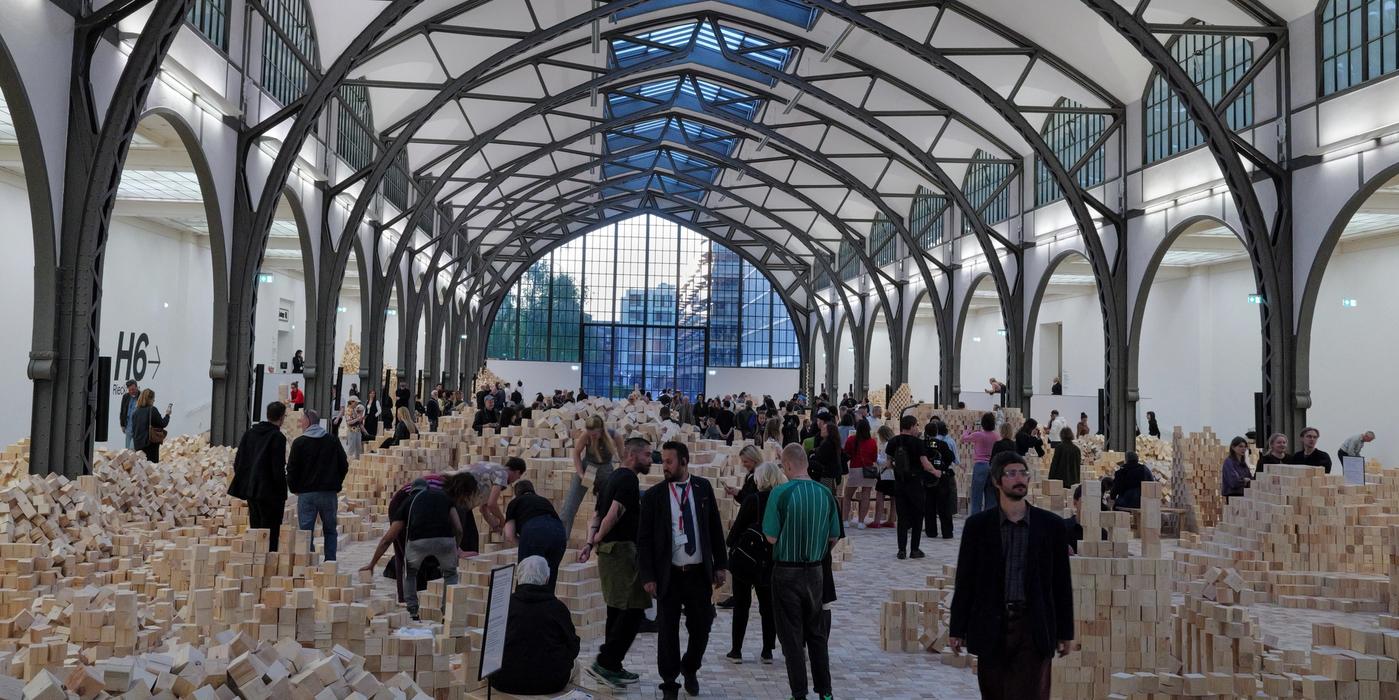
Its Historic Hall is a vast iron-arched nave with enormous glazed windows, one of the most architecturally dramatic exhibition spaces in Europe. Iron arches curve above the crowd like the skeleton of an industrial cathedral. Evening light enters through enormous windows. Even before you encounter the art, the building itself is the experience.
Pro Tip: Open Tuesday to Sunday, 10:00 to 18:00 (Thursdays until 20:00); closed Mondays. Tickets EUR 14 standard / EUR 7 reduced; free under 18; free first Sunday of each month. Book online during Gallery Weekend Berlin to skip the queue.
5Lina Lapelytė's We Make Years Out of Hours - The Anchor Commission of Gallery Weekend Berlin 2026
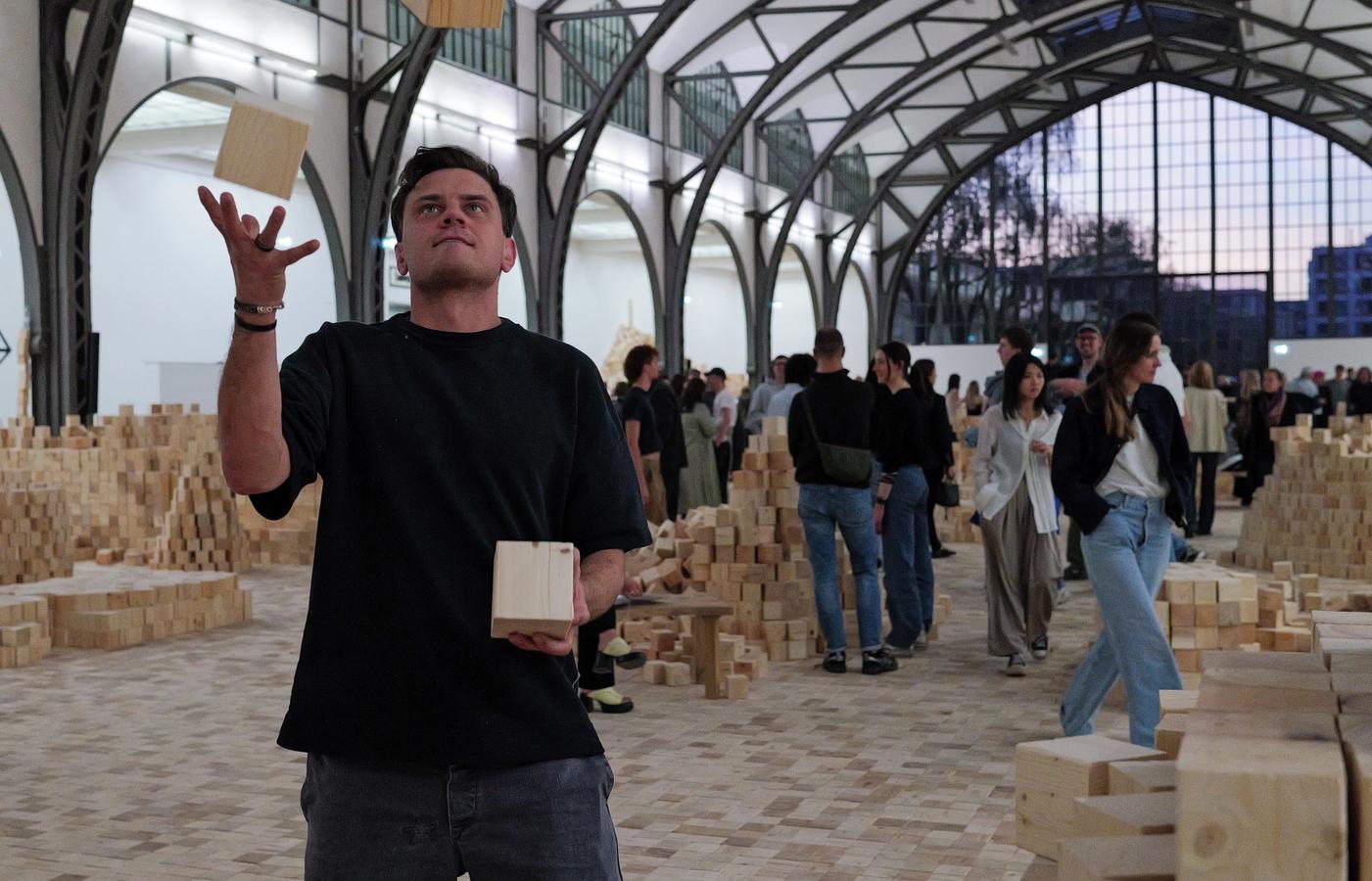
Inside Hamburger Bahnhof, the Historic Hall had disappeared beneath 400,000 wooden cubes for Lithuanian artist Lina Lapelytė's We Make Years Out of Hours, the anchor commission of Gallery Weekend Berlin 2026. Pine and spruce blocks stretched endlessly across the floor like an unfinished civilisation. Visitors and performers continuously rearranged the landscape, building towers, corridors, hills, and temporary monuments only for them to collapse again minutes later.
The work drew on poetry by Khalil Gibran, Etel Adnan, Mahmud Darwish, Ocean Vuong, and others, transformed into collective singing that moved slowly through the hall. The work resisted spectacle. In an era where contemporary art often screams in order to prove its relevance, Lapelytė's installation whispered. And because it whispered, people leaned closer.
At moments the installation resembled a city after collapse; at others, a playground; then suddenly, a sacred ritual. One photograph captured a man standing alone atop a mountain of wooden cubes speaking quietly on the phone, an almost absurdly contemporary image of modern isolation surrounded by collective material. Another frame revealed visitors throwing cubes into the air as if testing gravity itself. Elsewhere, carefully balanced towers leaned toward inevitable collapse, recalling both childhood construction games and the precariousness of political systems.
The title We Make Years Out of Hours lingered long after leaving the museum. It contains a deeply Eastern European understanding of time: that history is not built through grand declarations, but through accumulated endurance. Hours become years. Individuals become communities. Temporary gestures become history.
Pro Tip: The installation is a participatory work - visitors are invited to rearrange the cubes. Best visited during one of the performance hours when singers move through the hall. Photography is allowed, flash is not. Plan at least 90 minutes inside the Historic Hall.
Visual documentation by Dmitrijus Borisenka.

co-founder
trip1.com co-founder covering aesthetics of street, arts, urban, culture, graffiti and everything that catches an eye.
Berlin in One Day - Gallery Weekend FAQ
Yes for a focused trip, no if you want to cover the whole city. One day is enough to walk Kreuzberg, cross Oberbaumbrücke, and spend an evening inside Hamburger Bahnhof during Gallery Weekend Berlin. For Brandenburg Gate, Reichstag, Museum Island, and the East Side Gallery, plan for at least two or three days.
Gallery Weekend Berlin is the city's largest annual contemporary art event, run over the last weekend of April every year. In 2026 it anchored around Lina Lapelytė's We Make Years Out of Hours at Hamburger Bahnhof. Over 50 galleries and institutions open new exhibitions, performances, and commissions on the same three days, most with free admission and extended opening hours.
Kreuzberg is Berlin's most layered neighbourhood, famous for its Turkish bakeries and street markets, mural-covered apartment facades, the elevated U-Bahn line above Skalitzer Straße, techno bars and underground music, and a strong activist counterculture dating back to the 1980s. The district sits on the former East-West border at Oberbaumbrücke and remains the city's clearest case of contradictions held visible: cafés next to construction sites, rainbow facades next to Ottoman bakeries, gallery openings next to graffiti.
Yes. Hamburger Bahnhof is Germany's leading museum of contemporary art and houses major works by Joseph Beuys, Andy Warhol, Anselm Kiefer, and Cy Twombly. Its Historic Hall, a 19th-century iron-arched railway nave with enormous glazed windows, is one of the most architecturally dramatic exhibition spaces in Europe even before you reach the art.
Late April and early September are the two strongest months. Late April brings Gallery Weekend Berlin, when over 50 galleries and museums like Hamburger Bahnhof open new exhibitions on the same three days. Early September brings Berlin Art Week with major art fairs (Positions, abc) and museum collaborations across the city. Both fall outside peak tourist season, so flights and hotels are easier to find than in summer.
Hamburger Bahnhof is a 5-minute walk from Berlin Hauptbahnhof (S3, S5, S7, S9) or one stop from U6 Naturkundemuseum. Kreuzberg's centre is at Kottbusser Tor, served by U1, U3, and U8. A single BVG AB day ticket at EUR 10.60 covers the entire route, including the walk across Oberbaumbrücke.
One day in Berlin costs around EUR 50 to EUR 80 per person for a typical visit with transport, one museum, and two meals. For this Kreuzberg, Oberbaumbrücke, and Hamburger Bahnhof route specifically, budget EUR 25 to EUR 35: a BVG AB day ticket at EUR 10.60 plus Hamburger Bahnhof entry at EUR 14. Kreuzberg and Oberbaumbrücke are free. Add EUR 15 to EUR 25 for lunch at the Turkish Market on Maybachufer or a Spree-side café. Berlin remains one of the more affordable Western European capitals in 2026.
Yes. Berlin is consistently rated one of the safer European capitals for solo travellers. Standard urban precautions apply at night, particularly around Kottbusser Tor in Kreuzberg and Warschauer Straße in Friedrichshain, but the U-Bahn and S-Bahn run reliably until past midnight and Hamburger Bahnhof is in the well-lit central district of Moabit.